
How Expensive is AI? Explore the Costs of AI Technology
Is AI too costly, or is it a smart choice for business growth? The debate around AI costs shows two sides: high costs vs. high returns. As AI becomes essential for businesses, it’s crucial to understand its costs.
AI costs range widely. Simple AI systems can start at $5,000, and cutting-edge technologies can exceed $500,000. The cost goes beyond buying software. It includes powerful GPUs, servers, managing data, hiring experts, cybersecurity, and following rules.
Different industries, like healthcare or finance, may pay more for specialized AI tools. Adding AI might also bring extra costs, like updating systems to work well with new AI. The AI Readness Assessment Framework advises to balance these costs for the best long-term value and financial success.
Key Takeaways
- AI technology investment spans a broad range of expenses from initial acquisition to long-term maintenance.
- Simple AI solutions may be accessible, but advanced systems require significant financial commitment.
- Cost variations are prevalent across different industries due to unique technological requisites.
- AI implementation expenses extend beyond software to include hardware, talent, and compliance costs.
- Maintenance and strategic planning are essential for ensuring cost-effectiveness of AI investments.
- The AI Readiness Assessment Framework stresses the importance of evaluating long-term financial sustainability.
Understanding the Basics of AI Costs
When looking into AI’s price tag, we must think about start-up and running costs. Understanding machine learning costs means getting how different expenses affect an AI budget for businesses.
Initial Investment in AI Technologies
The first money spent on AI tech changes a lot by industry and use. For instance, AI in healthcare may need $20,000 to $50,000 to start. If you need faster computers and special software, costs can jump over $10,000.
Ongoing Operational Expenses
Regular spending is key in understanding AI’s economic impact. Costs like updates, fixing, and meeting tough rules add to a business’s ongoing expenses. This ensures AI systems are safe and running but means more costs over time.
Comparing Costs Across Industries
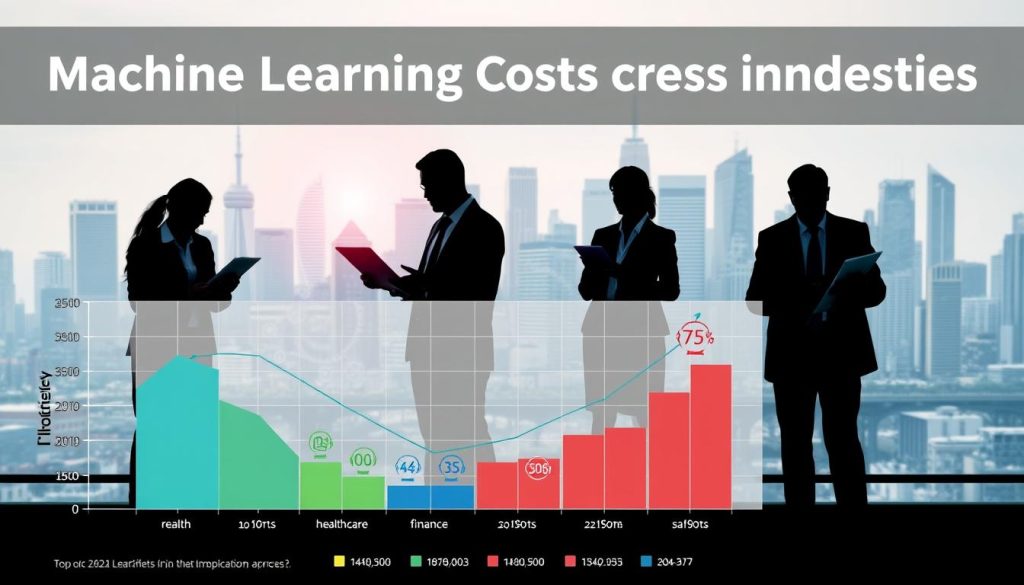
AI costs really differ by industry. For example, fintech might need up to $150,000 initially for their high security and computing demands. These differences come from each sector’s rules and specific needs, highlighting the importance of careful planning and budgeting.
Factors Influencing AI Pricing
Artificial intelligence (AI) deployment can vary a lot in complexity and cost. Several key factors affect the overall cost of artificial intelligence. Knowing these will help businesses plan their AI budget better.
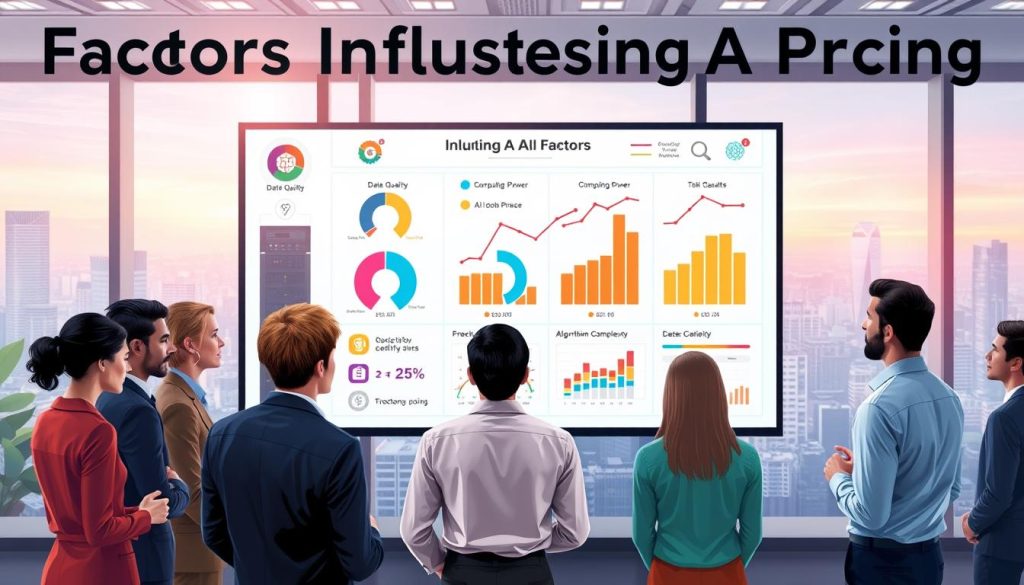
Development Team Expertise: The skill level of your development team greatly affects AI prices. Hiring top AI engineers and data scientists is expensive. They typically earn between $120,000 and $160,000 a year. This talented group is vital but also comes with high costs due to their specialized AI skills.
Data Acquisition Costs: Getting good data is essential for AI but it’s not easy or cheap. You’ll have expenses for gathering, cleaning, and preparing data. The data’s quality and quantity greatly impact AI implementation expenses. It’s crucial to have data that’s not only abundant but also relevant and high quality.
Technology and Infrastructure: The tech and infrastructure needed for AI also affect the cost of artificial intelligence. You might need to invest in advanced cloud services, special hardware for model training, and resources for data storage and processing. These are key for deploying AI systems efficiently and effectively.
| Factor | Details | Estimated Cost Impact |
|---|---|---|
| Development Team | High expertise in AI development | High |
| Data Acquisition | Quality and processing of data | Medium to High |
| Technology and Infrastructure | Investment in specialized hardware and software | Variable |
Looking at these factors together gives a full picture of AI pricing. Planning for AI involves getting the best people, managing lots of data, or using the latest tech. Each part is crucial for the success and growth of AI projects.
AI Solution Types and Their Price Ranges
Businesses can choose from many AI solutions depending on what they need and their budget. You might need a custom AI app or a simple tool. Each choice has a different cost and way of operating. It’s important for bosses to get what makes each choice unique.
Custom AI Solutions
Custom AI answers your specific business problems with unique solutions. They fit perfectly with what you need but can cost a lot. These are best for places where regular products just don’t work.
Off-the-Shelf AI Tools
Ready-made AI tools are less expensive. They come ready to use, which saves money and time at the start. They’re good for businesses that want AI benefits without spending a lot on custom options.
Subscription-Based AI Services
This is a middle ground between custom and ready-made solutions. With a subscription, you pay regularly to use advanced AI on a cloud platform. It lets businesses adjust costs over time. Plus, you always have the latest AI tech at your disposal.
Here’s a comparison of these options:
| Type of AI Solution | Investment Needed | Suitability |
|---|---|---|
| Custom AI Solutions | High ($50,000 to $500,000+) | Organizations requiring tailor-made features |
| Off-the-Shelf AI Tools | Low to Medium | Startups and small businesses |
| Subscription-Based AI Services | Medium (Recurring Costs) | Businesses needing scalability and flexibility |
Choosing the right AI solution is about knowing your business needs and budget. You might pick a pricey custom option or an easier subscription service. Understanding these choices can really help your business make the most of AI.
ROI and Cost-Benefit Analysis
It’s key for companies to understand the return on AI tech investment. This helps them spend their AI budget wisely. They need to look at early costs and long-term financial effects. This makes it easier to make smart choices and improve AI returns.
Finding out the ROI of AI means looking at the costs and benefits. These benefits can be more work done, happier customers, and new skills that give a competitive edge. Companies should think about both the money made and the strategic value AI adds.
| Aspect | Cost Implication | Benefit |
|---|---|---|
| Development and Deployment | Initial high capital investment needed for setup and integration | Streamlined operations and automation of routine tasks |
| Maintenance | Ongoing expenses related to updates and IT support | Less downtime, improved system reliability |
| Strategic Advantages | Investment in training and potential disruption during transition | Long-term growth from improved decision-making and innovation |
Looking at the long-term financial impact is crucial. It’s not just about quick savings or profits. It’s about how AI helps a business grow over time. This could mean doing things faster, entering new markets, or offering new stuff.
It’s also key to see value beyond just money in a detailed AI ROI study. Gains like getting ahead of competitors, speeding up new ideas, or better connecting with customers are vital. These might not show right away in finances but matter a lot for future success.
Hidden Costs of Implementing AI
Many organizations focus on the initial money needed for AI implementation expenses. But, several unseen costs greatly impact the total budget and financial planning. It’s key to know these hidden costs to manage and predict total machine learning costs well. This helps make moving to AI processes smooth and efficient.
Maintenance and regular updates take up a big part of AI costs over time. AI systems need continuous data and changes to algorithms to stay up-to-date and safe. These tasks need skilled people and can raise project costs more than expected.
Employee Training and Transition Costs
Putting AI into current work processes means staff need a lot of training. This ensures they can use the AI well and efficiently. The training cost changes based on how complex the AI is and what staff already know. Businesses need to plan for these training costs in their total AI implementation expenses.
Data Security and Compliance Issues
Adding AI into business operations also means spending on strong security measures and meeting legal standards. This includes using top-notch cybersecurity solutions and sometimes getting legal advice to follow data privacy laws right.
| Cost Type | Typical Expense | Frequency | Impact on Overall AI Costs |
|---|---|---|---|
| Maintenance/Updates | High | Monthly/As needed | Significant |
| Training | Variable | One-time/Periodic | Substantial |
| Security and Compliance | High | Ongoing | Critical |

To handle these hidden costs well, a strategic plan for AI is needed. This isn’t just about adding new tech. It’s also about getting ready for extra costs that come with it. Balancing these things can make AI use more successful. It gives a clearer view of overall machine learning costs.
Industry-Specific AI Costs
The cost to implement AI differs greatly across industries. Each has its own hurdles and needs, affecting the cost of artificial intelligence. We’ll look at healthcare, finance, and retail to understand these differences.
Healthcare AI Solutions
In healthcare, AI investment focuses on accuracy and meeting strict rules. Here, cost of artificial intelligence often falls between $20,000 and $50,000. This pays for AI that helps with complex diagnoses and managing patient care.
Financial Sector Investments
The finance sector invests heavily in AI, sometimes spending up to $150,000. High security and smart algorithms for lots of transactions and data push costs up.
Retail and E-commerce Applications
Retail and e-commerce use AI to improve shopping and manage stocks better. The cost is generally lower but brings a lot of value. It helps with customer service and keeping the supply chain smooth.
Looking at costs more closely, we see how they relate to what each industry needs and wants from AI:
| Industry | Cost Range | Key Drivers |
|---|---|---|
| Healthcare | $20,000 – $50,000 | Regulatory compliance, Precision diagnostics |
| Finance | Up to $150,000 | Security, Complex algorithms |
| Retail | Varies | Customer experience, Inventory management |
Understanding the cost of artificial intelligence requires knowing the specific needs of each industry. From hospitals to AI app development companies in retail, it’s crucial to balance the costs and benefits of AI investments.
Regional Variations in AI Pricing
The cost of AI differs greatly across regions, affected by the economy, infrastructure, and laws. It’s important for businesses to grasp these differences. Doing so helps in crafting smart AI plans worldwide.
In cities versus countryside areas, the availability of infrastructure is key for AI costs. Cities offer cheaper AI options due to better access and more competition. But, rural areas often see higher prices due to a lack of tech access and experts.
Local rules also have a big say in AI costs. Places with tough laws on data and privacy may see higher expenses. Thus, knowing the legal requirements is vital for finding cost-effective AI solutions while staying compliant.
The table below shows how AI pricing changes in various parts of the world. It looks at city and rural costs and the influence of laws. This helps understand how location affects AI investment.
| Region | Urban AI Pricing | Rural AI Pricing | Impact of Regulations |
|---|---|---|---|
| North America | Moderately High | High | Significant |
| Europe | Low | Moderate | Very Significant |
| Asia | Low | Variable | Moderate |
| Latin America | Low | High | Low |
| Africa | Very High | Very High | Low |
The difference in AI pricing by region shows the need for customized approaches. Strategies should reflect each area’s economy, access, and laws for the best AI outcomes.
Strategies to Manage AI Costs
Businesses using AI need to handle its cost wisely. It’s about knowing the expenses and keeping them low during setup. This approach is key.
Budgeting for AI Initiatives
Firstly, firms must plan their budget to match their money goals and AI’s benefits. It’s vital to know all costs early. This way, spending on AI won’t hurt its worth.
Prioritizing Cost-Effective Solutions
Companies should pick scalable solutions with low upkeep costs. Opting for AI with modular features helps avoid big initial expenses. Plus, it allows adding more as the need arises. Using a microservices design lowers costs too. It lets firms update parts without redoing the whole system.
Leveraging Public Resources and Grants
Grants from the government can help with the big costs of starting AI. These funds are crucial for smaller businesses. They not only help financially but also bring support from tech-focused public bodies.
Using these methods, businesses can handle AI costs better. This ensures that AI boosts efficiency without going over budget.
Future Trends in AI Costs
The future of AI investment is changing fast. Groups now put a big part of their AI budget to stay in the lead. Knowing future AI costs helps shape long-term plans. Even though AI costs might go up because we need more power, we see new trends that hint AI pricing could be more complex.
Predictions for AI Pricing in the Coming Years
Experts think new AI tech, like quantization, will balance rising costs. These advancements mean we’ll need less powerful hardware. This could make AI cheaper and easier for businesses to use. As AI gets easier to use, more companies can afford it. This change will help reduce how much companies spend on AI at the start and over time.
Emerging Technologies and Their Cost Implications
New tech is popping up that could change the AI world. Some focus on being green to lower AI costs. They use fewer resources, which is good for Earth and saves money. This push for efficient tech could cut future AI expenses. Plus, it values innovations that save money and the environment.
The Role of Competition in Pricing Dynamics
The AI market’s competition affects pricing, too. Companies fighting to be on top invest a lot in AI. Competition keeps prices competitive, which could lower costs for everyone. This competition may lead to flexible AI pricing in the future. Market forces and tech breakthroughs will both play a big part.
FAQ
What are the initial investment costs for implementing AI technologies?
How do ongoing operational expenses affect the total cost of AI?
How do AI costs vary across different industries?
How does the expertise of the development team influence AI pricing?
What role do data acquisition costs play in overall AI expenses?
How important are technology and infrastructure in determining AI costs?
What is the cost range for custom AI solutions versus off-the-shelf AI tools?
What factors should be considered when measuring ROI for AI projects?
What are some hidden costs associated with AI implementation?
How does the price of AI solutions in the healthcare sector compare to other industries?
Are there cost differences in AI implementation in urban versus rural areas?
How do local regulations affect AI pricing?
What strategies can companies employ to manage the costs associated with AI?
What are some emerging trends that could affect future AI pricing?
How might competition in the AI market influence pricing dynamics?
About the author : virtual-glasses