AI vs. Machine Learning: Key Differences Explained
Have you ever wondered if your smartphone is smarter than your home assistant? Let’s dive into how Artificial Intelligence (AI) and machine learning differ. These terms are often heard in tech talk. Understanding their differences can guide us through the upcoming tech era. But, figuring out how AI differs from machine learning can be tricky. Even though they’re linked, their roles in handling data and making predictions are unique.
Artificial Intelligence aims to create machines that think like humans. They tackle tasks from simple to complex, acting with a sense of freedom. Machine learning, however, is about machines getting better through experience. They improve by learning from data over time, without needing specific instructions for each job.
The merging of these technologies is changing fields like healthcare and finance. Knowing the difference between AI and machine learning is crucial. It shapes how we develop new strategies and innovations.
Key Takeaways:
- Grasp the essence of Artificial Intelligence as a broad spectrum of technologies emulating humanlike thinking.
- Understand machine learning as a subset of AI centered on data-driven learning and pattern recognition.
- Discover why knowing the distinction between AI and machine learning is essential for adopting the right technology solutions.
- Recognize how AI contributes to various domains beyond automation, such as creative problem-solving.
- Appreciate how machine learning can transcend mere data analysis, influencing real-time decision-making and forecasting.
Understanding Artificial Intelligence
The difference between AI and machine learning is key to knowing the range of tech driving today’s breakthroughs. AI uses complex algorithms and computing to mimic human thinking. Knowing the difference helps us see AI’s wide uses and its big impact on many fields.
AI includes machine learning, deep learning, natural language handling, and robotics. Each tech plays a unique part in improving computer tasks. Thanks to these technologies, AI can do lots from understanding speech to driving cars by itself.
- Definition and Scope of AI: AI is when machines mimic human brain work and learning. It can be something simple like a chess game or as advanced as a car that drives itself.
- Types of Artificial Intelligence: AI types range from basic machines without memory for decisions, to complex systems that know themselves. This shows the wide scale of machine smarts.
AI’s power is huge in areas like healthcare, making, and banking. In healthcare, AI goes through patient info or can tell what might happen next with patients. In making things, AI mainly makes work smoother through better maintenance and supply chain setups. AI also changes banking with smart ways to find fraud and tailor services to each customer.
AI improves these areas by making work faster, more precise, and with big economic pluses. As tech gets better, the lines between AI and machine learning blur more, highlighting AI’s big part in our future.
Exploring Machine Learning
Machine learning is a key part of AI, giving computers the ability to learn on their own. It uses algorithms to turn data into predictions and solutions for different areas.
But what is machine learning, really? It’s a technology that learns from data to improve its predictions over time. The uses of machine learning are very broad, showing its flexibility in real-world situations.
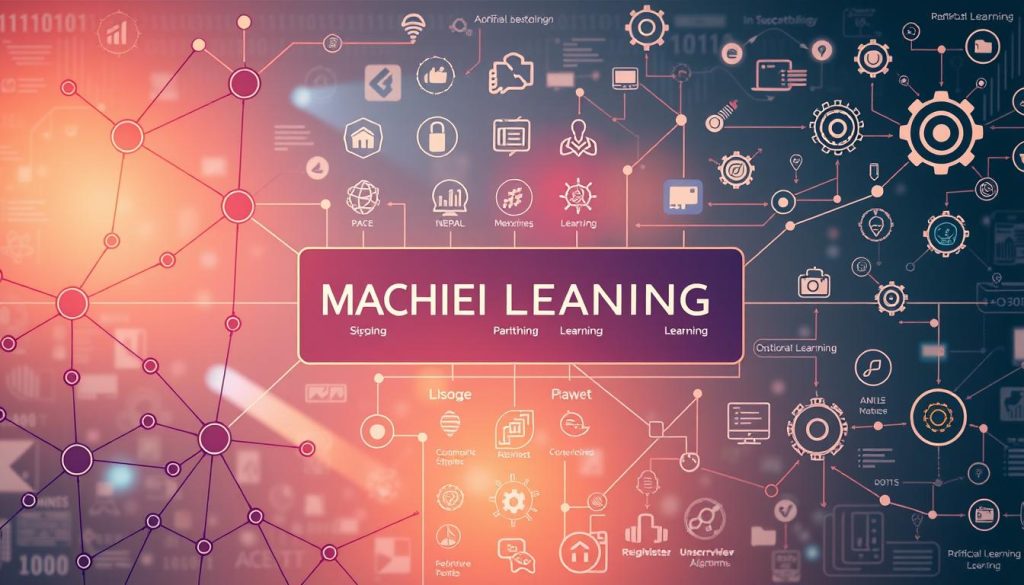
We often talk about supervised and unsupervised learning in machine learning. Supervised learning trains with clear, labeled data, like learning with an answer key. Unsusupervised learning, meanwhile, deals with unlabeled data and tries to find patterns on its own.
| Type of Machine Learning | Definition | Example Applications |
|---|---|---|
| Supervised Learning | Models predict outcomes based on labeled training data. | Email spam filtering, Predictive analytics |
| Unsupervised Learning | Algorithms identify patterns and relationships in unlabeled data. | Market basket analysis, Customer segmentation |
| Deep Learning | Advanced neural networks handle complex data inputs and learn hierarchical features. | Speech recognition, Image recognition |
Machine learning applications are changing the world, from healthcare to making better and safer online spaces. Understanding the differences between AI and machine learning sheds light on how these technologies work together.
Deep learning, a type of machine learning, has changed many industries by solving complex problems. This highlights the impactful role of machine learning in technology.
The Relationship Between AI and Machine Learning
It’s vital to understand how AI and machine learning connect in tech. ML and AI connected show a powerful partnership. Machine learning is like the engine for AI, helping systems learn from data. This lets them get better over time without being programmed how to do so.
Talking about AI versus ML means seeing how machine learning powers AI. This technology plays a huge role in functions from voice recognition to predicting future trends. The AI vs ML debate shows how crucial both are to technology today.
How Machine Learning Fits into AI
Machine learning is a key part of AI, focusing on systems that learn from data. This self-learning is essential for AI. It lets AI systems handle new scenarios on their own, making them smarter without human help.
Other Subfields of AI Apart from Machine Learning
Besides machine learning, other subfields of AI are changing technology:
- Deep Learning: This uses complex neural networks to dig into data. It’s very effective in areas like image and speech analysis.
- Natural Language Processing (NLP): Helps machines understand and answer human text or voice. This is key for things like chatbots and language translation.
- Robotics: Brings AI into physical robots. This is making big changes in how things are made, delivered, and more.
Key Differences Between AI and Machine Learning
The fields of artificial intelligence (AI) and machine learning (ML) keep growing. Knowing how they differ helps us apply them better across various areas. The main things that set AI and ML apart are their goals, methods, and how they deal with data. Let’s explore these key differences to understand how AI systems and ML models work.
Focus and Objectives
AI and ML have different targets. AI aims to mimic human thinking, solving tricky questions and making choices like a human would. On the other side, ML is all about getting insights from data, spotting patterns, and deciding things with little to no human help. It values being right and fast.
Algorithms and Techniques Used
AI uses a wide variety of algorithms, more so than ML. Techniques like neural networks, decision trees, and even using ML itself, allow AI to do things like recognize speech and drive cars without a person. ML’s algorithms, though, are focused on analyzing data to forecast what will happen next, aiming at precise tasks more than wide-ranging skills.
Data Processing and Learning Methods
The way AI and ML handle and learn from data sets them apart too. AI systems can learn from all sorts of data. They adapt over time and can even reason to make choices. ML typically uses statistical models on well-organized data. It looks for patterns and gets better as more data comes in. This marks a clear difference in how AI learns broadly and ML focuses on adapting to specific, though often less diverse, data models.
Common Misconceptions
When we talk about AI vs machine learning, it’s key to clear up some common errors. Many get confused about AI and machine learning’s roles. This affects how they’re used and seen in different areas.
Many think AI is just for automating tasks. But AI can solve complicated problems and help make decisions. This shows the big difference between AI and machine learning. AI is a wide idea that leads to new inventions beyond simple tasks.
Machine learning isn’t just a fancy way to look at data. Yes, ML uses data to work, but its real power is how it gets better by itself. It learns from patterns and info, making it smarter without needing people. This is a big deal in fields like business and healthcare.
It’s super important for tech folks, companies, and everyday people to get these details right. Knowing the truth lets them make smarter choices or plan better. Now, let’s tackle some myths and share what’s really possible:
| Technology | Misconception | Reality |
|---|---|---|
| Artificial Intelligence | Limited to automation | Includes machine learning, solving problems, and more |
| Machine Learning | Just a data tool | Adapts and learns to improve decisions and accuracy |
Understanding these points clearly helps everyone get the true picture of AI vs machine learning. It leads to better talks and use of these game-changing technologies.
Similarities Between AI and Machine Learning
When we talk about AI vs ML, it’s key to see how alike they are. Both are core to today’s tech advancements, helping make better decisions and change business ways.

AI and machine learning shine in improving decision-making across fields. Whether it’s healthcare or finance, they offer a way to handle huge data sets. This helps people make smarter choices faster and more accurately.
Their power comes from using data to learn and solve big problems. Together, AI and machine learning create a strong system. They show us the amazing things machines can do when they work together.
- Improved Efficiency: AI and ML make data analysis quicker.
- Precision in Analytics: They deliver highly accurate predictions and plans.
- Scalable Learning: As data grows, AI and ML get better at forecasting.
AI and machine learning are pushing industries forward. They lead the way in innovation and performance with insights from data.
Current Trends in AI and Machine Learning
As we explore AI and machine learning, innovation is clearly defining both areas. The growth in AI vs machine learning trends reflects progress seen across technology. This includes advancements in algorithms and data processing.
New AI inventions bring smart devices and autonomous systems into our daily lives. This makes artificial intelligence easier to use and more powerful. Meanwhile, the evolution of machine learning shows more advanced models. These models improve predictions without needing humans to guide them.
Innovations in both sectors are not only redefining existing paradigms but are also setting the stage for unprecedented technological synergies that fuel further advancements.
Popular ML techniques like deep learning are changing how machines see and interact with our world. Deep learning uses big neural networks. These networks analyze large amounts of data. This opens doors for predicting outcomes and solving complex problems in many fields.
| Technique | Use Case | Impact |
|---|---|---|
| Deep Learning | Image and Speech Recognition | Improves user interaction with AI systems |
| Neural Networks | Data Analytics | Enhances pattern detection for big data |
| Predictive Models | Financial Forecasting | Increases accuracy of market trends prediction |
These popular ML techniques are pushing what machines can learn and do. They’re not just changing theories but also offering real benefits in various fields.
The future of both AI and machine learning is bright, with constant growth. Knowing these trends is essential for using AI’s potential in any innovative sector.
The Future of AI and Machine Learning
AI and machine learning will keep evolving, changing jobs and the economy a lot. The effect on the economy is expected to be big as sectors adjust to new efficiencies. These advances come from AI and ML.
At the heart of these changes is the need for responsible AI and ML. This is crucial for using these technologies fairly and sustainably.

Looking closer, the ethics of AI is key in making sure AI is developed and used right. As machine learning gets more complex, its ethics guide us toward stricter rules. This ensures AI and ML promote innovation without losing sight of moral values.
| Aspect | Current Status | Future Expectations |
|---|---|---|
| Employment Opportunities | New tech-driven roles emerging | Increase in AI-specialized roles |
| Economic Impact | Automation boosting productivity | Significant GDP growth in tech-driven sectors |
| AI Ethics & Regulation | Developing frameworks | More comprehensive and universally adopted standards |
| Responsible AI Implementation | Early stages of ethical AI adoption | Widespread integration of ethical AI practices |
Looking into the future, understanding AI ethics and economic effects is key. The chance to change workplaces and industries is huge. But we need a responsible approach for lasting and good growth.
Challenges Facing AI and Machine Learning
In the world of AI and machine learning, experts face big challenges. One major issue is AI vs ML challenges. Problems with data privacy in AI and bias in ML algorithms are at the top of the list. Working through these hurdles is key for tech growth and benefiting everyone.
Talking about data privacy in AI, it’s crucial to keep personal data safe. As AI learns from lots of data, the chance of privacy issues increases. This means making sure data is handled and protected well is a must to keep trust and follow laws.
Meanwhile, bias in ML algorithms is a big issue to tackle. If the data used to teach ML is biased, the AI could make unfair decisions. This might hurt people when it comes to jobs, the police, and getting loans. That’s why creating fair ML practices is vital for fair and unbiased AI tools.
| Challenge | Impact | Strategies for Mitigation |
|---|---|---|
| Data Privacy Concerns | Affects user trust and compliance with data protection laws | Implement advanced encryption methods and robust data anonymization techniques. |
| Bias in Algorithms | Can lead to unfair outcomes and discrimination | Enhance diversity in training datasets and regular audits of ML algorithms. |
To deal with these issues well, keeping up with cybersecurity and ethical AI is a must. Finding a good balance will let us enjoy the perks of AI and ML. They can do a lot of good if we keep to high moral and privacy standards.
Conclusion: The Importance of Distinction
We’ve learned that knowing the difference between AI and machine learning is crucial. Though often used as if they’re the same, their differences matter a lot. They show us two unique paths for machines to learn or improve what humans can do. Grasping this difference is key to making the most of both in tech and business.
Artificial intelligence aims to create systems that can think like humans. Machine learning, however, teaches computers to learn from experience. This detail points out how each field brings its own innovations to computer science.
Understanding AI and ML is more than tech talk; it affects how we face new challenges. Knowing the difference helps in planning better for the future. This includes thinking about ethics and the effect on society. As these technologies blend into our everyday life, recognizing their distinct roles is vital for using them wisely.
FAQ
What is the difference between AI and machine learning?
What are the types of artificial intelligence?
Can you give examples of AI applications in different industries?
What is machine learning?
What are the different types of machine learning?
How does machine learning fit into the broader context of AI?
What are some other subfields of AI besides machine learning?
What are some misconceptions about AI?
In what ways are AI and machine learning similar?
What are the current trends in AI and machine learning?
How might AI and machine learning impact employment and the economy in the future?
What are some ethical considerations in the development and use of AI?
What challenges are AI and machine learning currently facing?
About the author : virtual-glasses