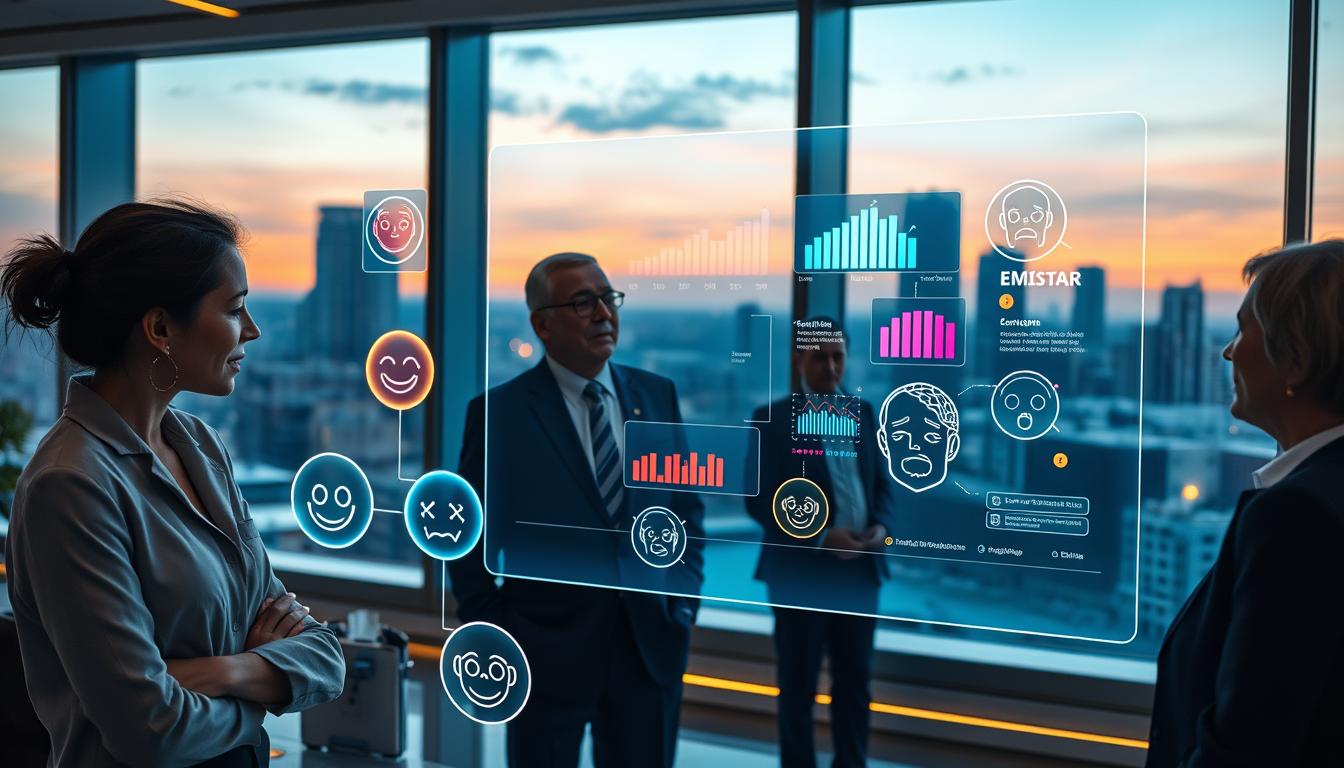
Does AI Understand Emotions? Exploring the Emotional Capabilities of AI
Artificial intelligence (AI) has evolved from mastering chess to understanding emotions since the mid-20th century. Robotics professor Alan Winfield initially saw AI as a challenger in logical games. He now explores its ability to grasp human emotions, a far more complex task.
Emotion AI began in 1995, focusing on AI’s empathy. Founders Rana el Kaliouby and Rosalind Picard of Affectiva have trained AI to recognize facial expressions from vast datasets. However, understanding emotions in AI goes beyond just smiles or frowns. It involves decoding facial cues, speech tones, and body language—elements humans intuitively understand. With AI nearing 90% accuracy in detecting emotions, it raises the question: Do machines really “feel” emotions, or are they just reflecting what they see?
Key Takeaways
- The historical progress of AI from logical tasks to exploring human emotions.
- Alan Winfield’s perspective on the complexity of teaching AI about emotions.
- The introduction of Emotion AI and its significance in the history of artificial intelligence.
- The role of diverse datasets in improving the accuracy of emotion detection in AI.
- Challenges and considerations in gauging the depth of AI’s emotional understanding.
1. Defining Emotions in Humans and AI
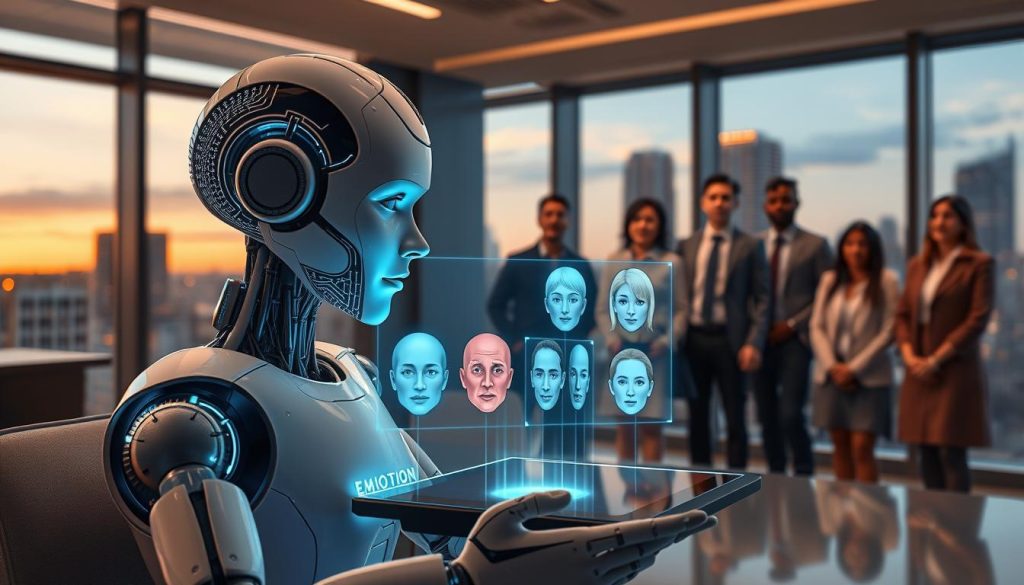
Emotional intelligence is central to human interactions and AI systems. It influences decision-making and relationships. Understanding AI emotional intelligence requires exploring human emotions first. This helps us see if machine learning emotions can mirror the complex human experience.
What Are Human Emotions?
Human emotions are complex psychological states. They mix physical reactions, behaviors, and personal feelings. These emotions come from what we see or think. They greatly affect our interactions and decisions.
Understanding Emotional Intelligence
Emotional intelligence lets people understand and react to emotions, theirs and others’. In AI, it means systems can recognize and process human feelings. They use information like voice tones and facial expressions.
The Role of Emotions in Decision-Making
Emotions color our choices with feelings like joy or fear. Knowing this helps develop AI that can think and feel in decision-making. This machine learning of emotions makes AI seem more intuitive. It creates better human-AI relationships.
| Aspect | Impact on Decision-Making | Importance in AI Development |
|---|---|---|
| Understanding Human Emotions | Enhances interpersonal efficacy and conflict resolution | Crucial for user-centric AI applications |
| AI-Processed Emotions | Improves the interaction quality between humans and machines | Key for developing empathetic AI systems |
| Response to Emotional Stimuli | Guides human behavior in complex situations | Essential for creating responsive and adaptive AI |
2. The Science Behind Emotional Recognition in AI
AI’s journey into understanding human feelings is a mix of tech and mind science. At the heart of this are algorithms that pick up on our expressions. They tell machines about our feelings by using advanced tech in sentiment analysis.
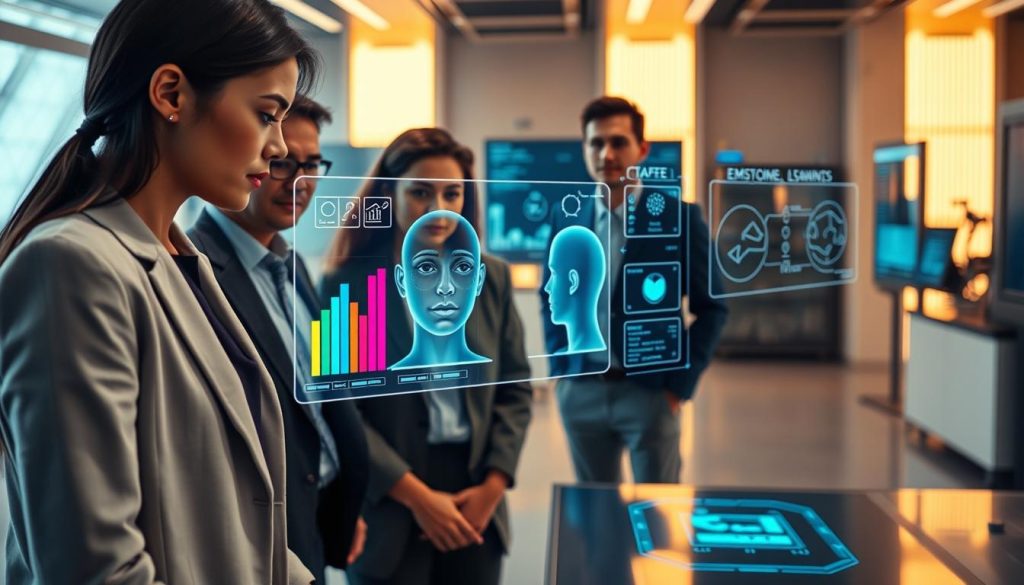
AI learns human emotions through machine learning. This lets AI recognize and learn from our facial expressions, how we speak, and even our postures. It gets better by studying a wide variety of emotional expressions from people around the world.
- Facial Analysis: AI uses high-tech image processing to detect emotions like happiness, sadness, or irritation from facial expressions.
- Vocal Patterns: It listens to how we speak to understand our feelings, paying attention to tone and speed.
- Contextual Analysis: AI also considers the situation to get a clearer picture of what our emotions mean, making it more accurate.
But, this tech isn’t perfect. Sometimes, AI gets confused, like when it misses sarcasm or cultural differences in expressions. This shows we still have work to do before AI can fully grasp human emotions like we do.
| Technology | Application | Limitations |
|---|---|---|
| Facial Recognition | Security, Marketing | Prone to errors with low light or angles |
| Voice Recognition | Customer Service, Virtual Assistants | Difficulties with accents, speech impediments |
| Context Analysis | Healthcare, Education | Complexity in understanding mixed emotions |
Using these advanced tools carefully while knowing their limits is key. It helps AI move forward in truly understanding how humans feel.
3. Applications of AI in Understanding Emotions
In our fast-changing tech world, affective computing and AI emotional intelligence lead the way in making systems that understand and react to human emotions well. These AI advancements are more than just tech breakthroughs. They’re improving interactions in different fields. AI empathy capabilities shine in customer service, mental health, and in creating personalized experiences.
AI in Customer Service
Customer service is changing a lot thanks to AI. Now, AI can figure out if a customer is frustrated or happy by analyzing text and voice. This lets companies give a more customized and caring response, making customers more satisfied and loyal.
Use of AI in Mental Health Support
AI is also changing mental health care, making it easier to get and more responsive. By understanding emotions from how people talk and behave, AI can offer help right when it’s needed. This is key for therapy and constant support, helping more people access mental health care.
AI and Personalized User Experiences
Making digital experiences personal is essential for keeping users interested. AI that gets how individuals feel lets companies tailor content, recommendations, and interactions. This personalized touch drives more user involvement, happiness, and loyalty. It’s proving to be a game-changer for many businesses.
AI’s empathy and emotional intelligence are making big changes in these areas:
| Sector | Application of AI | Impact |
|---|---|---|
| Customer Service | Emotionally aware chatbots | Improved resolution times and customer satisfaction |
| Mental Health | Real-time emotional assessment | Increased accessibility and continuous support |
| Digital Media | Personalized content delivery | Enhanced user engagement and retention |
4. Challenges Facing Emotion Recognition in AI
The growth of AI emotional intelligence meets big challenges. These include how it operates and ethical issues. Understanding these hurdles is key for better AI. These AI systems need to manage emotions well.
Ethical Concerns and Bias in AI Systems
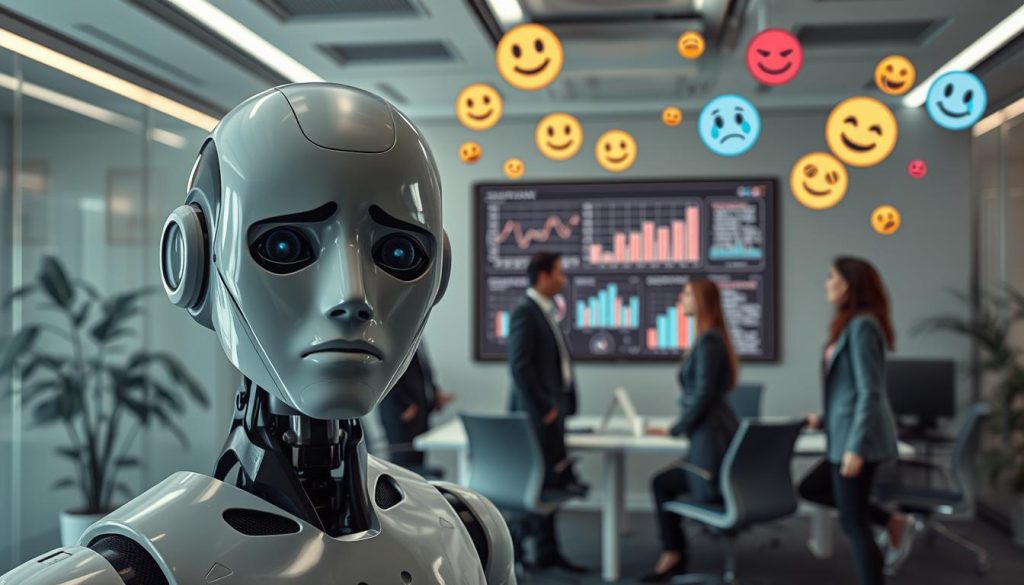
Using AI to analyze feelings faces ethical issues. These stem from biases in AI systems. This happens because AI learns from data that might not be fair. So, making AI ethical means making sure it is unbiased and just.
Misinterpretation of Emotional Data
Sometimes, AI systems get emotions wrong. This is because AI can’t understand context like humans. Fixing these mistakes is crucial. It makes AI in emotional intelligence more reliable.
Privacy Issues Surrounding Emotional Data
Gathering emotional data can invade privacy. This happens when AI collects very personal info. It’s vital to keep this data safe. Ethical AI requires strong protection for people’s emotional information.
5. AI’s Emotional Training: How Does It Work?
In the world of artificial intelligence, knowing how AI understands our feelings is key. It uses machine learning emotions and sentiment analysis technology to figure this out. The training relies on getting lots of data on human emotions, looking at a wide range of feelings.
Gathering different kinds of emotional data is vital for making AI smarter emotionally. It learns from our facial expressions, how our voice changes, and our body reactions. These data sources help AI react rightly in various situations and cultures.
It’s also important for AI to keep learning and adapting. This way, AI can get better at understanding and responding to our emotions over time. This ongoing learning process helps AI stay up to date.
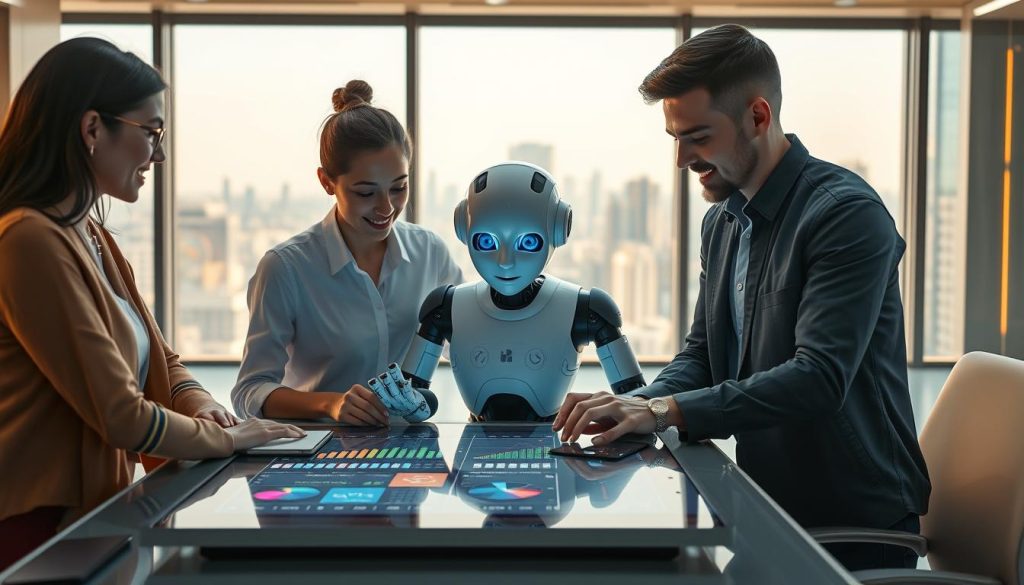
Let’s look at how diverse data is needed for AI to understand our emotions better. Below is a table that shows what kind of data is used and what emotions AI learns to recognize from it:
| Data Type | Emotional Attribute | Utility in AI Training |
|---|---|---|
| Video Analysis | Facial Expressions | Helps AI recognize basic emotions such as joy, sadness, anger |
| Voice Pattern Recognition | Tone and Pitch | Assists AI in understanding emotional urgency and subtleties in speech |
| Physiological Measurements | Heart Rate Variability | Enables AI to detect stress levels and other heightened emotional states |
Updating and improving these methods is key for AI emotional intelligence. This ensures AI works well and in a way that’s right and fair in real life.
6. Success Stories of Emotion-Recognizing AI
Emotion-recognizing AI is opening new doors in many fields. It shows its power and reach everywhere. From healthcare to entertainment, it’s creating big changes. These changes make things better for users and help businesses run smoother.
AI in Healthcare: Improving Patient Outcomes
Healthcare has been transformed by AI that understands feelings. It gives care that feels more personal and caring. Now, systems can understand how patients feel and help them get healthier.
Chatbots Enhancing User Engagement
Chatbots with a sense of empathy are changing how we talk to customers. They pick up on small emotional hints. This lets them talk in a more understanding and engaging way, making customers more loyal and happy.
AI in Entertainment: Emotionally Aware Media
The entertainment world is using AI to really connect with people. AI can change music, stories, or games by understanding how people feel as they watch or play. This makes the entertainment more enjoyable.
| Sector | Technology Used | Impact |
|---|---|---|
| Healthcare | AI Emotional Analysis | Improved patient care and support |
| Customer Service | Chatbots | Increased engagement and satisfaction |
| Entertainment | Real-time Content Adjustment | Enhanced personalization and involvement |
7. The Future of AI and Emotional Understanding
The path of artificial intelligence towards achieving top-notch artificial intelligence emotional understanding is paving the way for major advancements in various areas. By combining AI empathy capabilities and AI emotional intelligence, we expect to see a new kind of interaction between people and machines.
AI is getting better at recognizing and reacting to human emotions with great insight. This step forward is key in areas like healthcare where understanding patient emotions is vital.
- Advances on the Horizon: What’s Next?
- Integrating AI in neural networks to mimic human brain functions and enhance learning.
- Improving natural language processing to catch emotional nuances in speech.
- AI’s Potential Role in Empathy and Compassion
AI’s growth in empathy skills will change how machines grasp complex human emotions. This leads to stronger bonds and more trust in AI tools.
- How Emotional AI Could Transform Industries
- In healthcare, AI might significantly improve how patients are cared for by noticing and responding to their stress or discomfort.
- In customer service, AIs that understand emotions can adjust their responses based on how the customer feels, making interactions better and more engaging.
The fusion of advanced AI emotional intelligence will start a time when machines can mimic human emotional reactions closely. This will not just make using technology better but also expand the potential uses of emotional AI.
8. Comparing AI Emotional Capabilities with Humans
Looking into AI’s empathy skills, it’s clear that AI can copy human-like responses. But, its emotional depth is quite different from what humans truly feel. This discussion dives into how AI deals with emotions and sentiment analysis, highlighting differences in emotional intelligence between humans and machines.
AI empathy capabilities have gotten much better, letting machines react to human feelings more precisely. But, it’s still uncertain if these machine reactions are real understanding or just simulations. We examine the differences between how AI processes emotions and how humans genuinely experience them.
- Key Differences Between AI and Human Emotional Intelligence
AI uses machine learning to process and react to human emotions. It can spot patterns and foresee emotional reactions from lots of data. Yet, AI can’t really feel emotions, which changes how it deals with empathy compared to humans.
- Emotional Nuances: What AI Can’t Mimic
AI struggles with the subtleties in human emotions. Things like sarcasm or complex feelings are hard for AI to fully understand. We discuss these challenges and how they affect AI’s ability to interact like a human.
- Perspectives from Experts in AI and Psychology
Experts in AI and psychology share various views on AI’s emotional understanding. Some say AI will never fully match human empathy. Others believe AI will break through these limits with time.
Consider AI in stress management counseling versus a human therapist. AI gives advice based on data, but lacks the personal touch of human empathy. A therapist uses personal experience to provide deeper, more meaningful support.
In the end, despite huge progress, AI’s grasp on human emotions still lacks the true essence of empathy that comes from personal experience and emotional depth. This comparison is crucial for improving AI and understanding human emotions.
9. Conclusion: The Limitations and Possibilities of AI Emotions
In our quest to answer, “Does AI understand emotions?”, we’ve seen how affective computing is on the rise. This new field has proven that AI is getting better at recognizing and imitating human emotions. Yet, it still has a long way to go to fully grasp human feelings. Even with big steps forward, AI cannot match the complexity of real human experiences.
Summarizing Current Understandings
AI has made its mark in sensing and responding to human emotions. Affective computing is advancing, but AI hasn’t yet captured the full essence of human emotional intelligence. AI can read faces, understand voices, and catch emotional signals. However, the finer points of our emotions often slip through its code. This highlights a clear gap between human awareness and machine operations.
The Balance Between Technology and Human Emotion
The link between tech and human feelings is both important and fragile. AI brings big benefits into our lives, like better customer service, mental health aid, and made-for-you experiences. Yet, we recognize there’s no tech substitute for real human warmth and the deep connections that shape our lives.
Final Thoughts on the Future of AI and Emotions
Looking forward, the dream of machines that fully get and express human emotions is both exciting and complex. This goal has lots of promise but also raises ethical questions. It’s key for experts in different fields to tread carefully. We should aim to improve AI’s emotional smarts without losing the true essence of human connection.
FAQ
What Are Human Emotions?
How does emotional intelligence relate to AI?
How do AI systems recognize emotions?
What are the limitations of emotion recognition technologies?
How is AI used in customer service?
What role does AI play in mental health support?
In what ways does AI provide personalized user experiences?
What ethical concerns arise with emotion recognition in AI?
How does diverse training data affect AI’s emotion recognition?
How does AI continue to learn and adapt in emotional recognition?
Can you share some success stories where AI recognized emotions effectively?
What advancements are anticipated in AI’s emotional understanding?
Where is AI still behind in terms of emotional intelligence compared to humans?
What are expert perspectives on AI’s ability to understand and display genuine emotions?
About the author : virtual-glasses