What is the Future of AI?
We’re at the edge of a new age, asking ourselves: What’s next for AI? This technology could be like a new industrial movement, becoming part of our everyday lives. Over 60 countries are creating plans to use AI, pushing us towards an AI-driven future. This could add up to USD 4.4 trillion to the world’s economy through amazing innovations.
AI is now more than just sci-fi stories. It has grown into generative AI, changing how we create content and solve problems. Now, with tools like multimodal AI and user-friendly platforms, even non-experts can use this tech. And with the advances in Auto-ML and the dream of AGI close, we’re about to see AI and human creativity reach new heights.
Key Takeaways
- Understanding what the future of AI might hold and its potential impact on society.
- Assessment of the transformative potential of AI and how it will likely reshape industries.
- Exploration of national AI strategies and their significance in global AI investment trends.
- Insight into the economic implications of AI and its contribution to global wealth.
- Anticipation of user-friendly AI applications, Auto-ML systems, and the emergence of AGI.
- Reflection on the integration of AI into personal and professional dimensions of life.
The Evolution of Artificial Intelligence
The history of artificial intelligence (AI) is a tale of amazing changes. Historical events and new ideas have entirely changed technology’s landscape. AI keeps progressing, making machines smarter and affecting lots of areas like healthcare and cars. Machine learning shows how AI not only makes things better but also creates new ways to use technology.
Key Milestones in AI Development
AI’s story is full of big moments that show its huge impact. One famous event was in 1997 when IBM’s Deep Blue beat the chess champion Garry Kasparov. Deep Blue’s victory showed AI’s skill in complex thinking tasks. Recently, AI models like GPT-4 and open-source projects like Llama 3.1 have changed how we interact with machines. They suggest exciting future uses for AI.
The Rise of Machine Learning
Machine learning is a leading part of AI’s progress. It lets systems learn from data and get better on their own. This has led to smarter and more adaptable technology. Machine learning is changing industries by making things more efficient and focused on using data well.
Breakthroughs in Natural Language Processing
Big improvements have also been made in natural language processing (NLP). NLP allows machines to understand and respond to human language smartly. These advances have made gadgets like virtual assistants and chatbots better. They also help machines understand more, leading to smarter data analysis and decisions.
AI’s development is truly impressive, taking us closer to what seemed like fantasy. Looking ahead, AI’s ability to change our lives and the whole world is limitless. It promises even greater uses in our day-to-day lives and across all sectors.
Current Applications of AI in Various Industries
AI-driven innovations have changed how various sectors operate, making services more efficient and effective. This shows AI’s crucial role in society, changing industries like healthcare and retail with new applications.
AI in Healthcare
AI has improved healthcare by providing better diagnostic tools, patient care, and management systems. It introduced things like virtual nursing assistants and predictive analytics. These innovations lead the way in enhancing medical care and patient outcomes.
AI in Finance
In finance, AI is key for spotting fraud, assessing risk, and improving customer service. It uses complex algorithms to spot and stop fraud. This is a big win for banks and their customers.
AI in Retail
Retailers use AI to offer personalized shopping, manage inventory better, and streamline their supply chains. By studying large amounts of data, AI helps predict trends and understand what consumers want, offering recommendations that fit individual tastes.
The Role of AI in Enhancing Productivity
Artificial intelligence (AI) is changing how we work by making things faster and smarter. It does this by speeding up tasks and helping with smart decisions. AI is playing a big role in improving how businesses operate and think. This is making workplaces more productive and innovative in many fields.

AI is amazing at doing routine tasks without getting tired. It can chat with customers or sort through lots of data. This lets people work on harder, more creative jobs. It makes work life better by cutting down on boring tasks.
AI also helps a lot in making better decisions. It can look through huge piles of data quickly. This gives leaders the info they need to make smart choices. AI can predict what might happen next. This is great for planning ahead and avoiding risks.
| Function | AI Impact | Expected Outcome |
|---|---|---|
| Data Analysis | Automated processing and interpretation | Increase in speed and accuracy of insights |
| Customer Support | AI-driven chatbots and virtual assistants | Enhanced response times and customer satisfaction |
| Strategic Planning | Utilization of predictive analytics | Improved foresight and decision-making accuracy |
AI is making a big mark on business productivity. It automates simple tasks and improves how we make decisions. AI creates a lively business scene. It also sets the stage for AI’s future role in changing how industries work. This move towards more growth and new ideas goes well with human ingenuity and careful planning.
Ethical Considerations Surrounding AI
The rise of artificial intelligence (AI) is changing our lives. It brings up ethical challenges we need to handle to keep our trust in tech. It’s important to discuss AI ethics and regulation. This means making rules for responsible AI deployment and ensuring AI transparency. These steps help protect our rights and promote innovation.
One key issue is preventing AI from being biased. We must ensure AI doesn’t adopt or spread unfairness in society. Using clear algorithms helps identify and fix bias. This promotes fairness in decisions made by machines.
Privacy with AI is a big worry too. AI works with huge amounts of data, and misuse is a risk. We need a balance between using data for good and protecting our info. Clear rules and practices are needed to manage this.
Accountability is crucial when AI makes a mistake. We must know who is responsible for fixing it. This requires strong oversight and ethical standards all agree on.
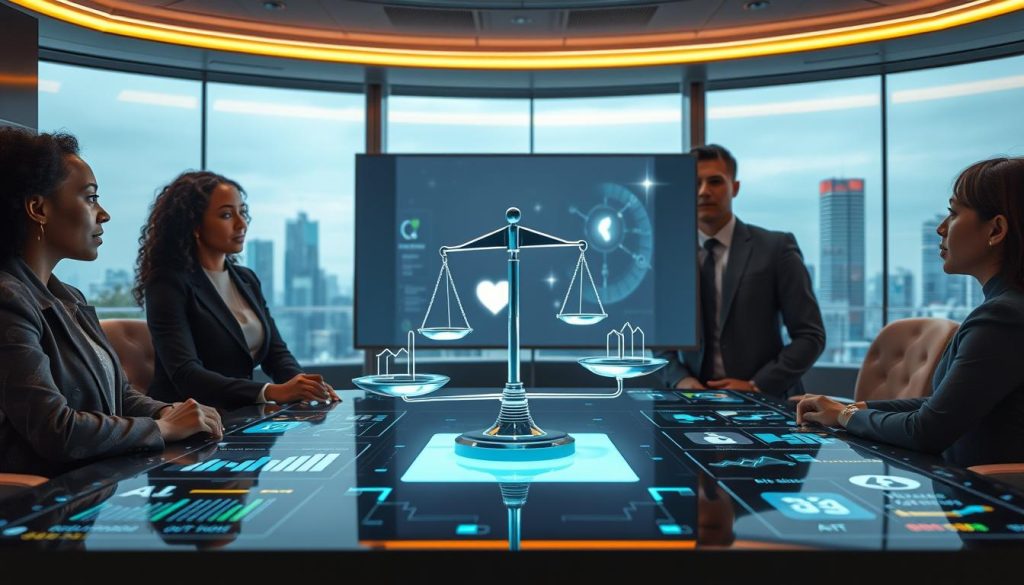
This picture shows the ethical concerns and steps needed for fair AI use. As AI grows, staying focused on these matters is key. This ensures a future where tech is fair and answerable.
The Potential of AI in Climate Action
Artificial intelligence (AI) plays a big role in fighting climate change. It’s leading the way in making strategies that stop environmental harm and boost sustainability. AI helps in carefully watching over forests and making energy use smarter, advancing our fight against climate issues.
AI, especially the kind that saves energy, is key in cutting down industries’ carbon emissions. By using these smart AI technologies, businesses cut down their harm to the environment and work better. This shows why it’s important for companies to use AI if they want to be sustainable.
Mitigating Environmental Impact
- AI can predict environmental changes early, helping us avoid bad outcomes.
- By improving climate models, AI gives us better weather forecasts. This is crucial for farming and preparing for disasters.
- AI makes using resources in all sectors more efficient, cutting down waste and saving energy.
Enhancing Renewable Energy Solutions
- AI helps bring renewable energy like solar and wind into our power grids, making energy use smarter and less dependent on oil and gas.
- It uses smart tech to manage energy storage, helping use more green energy.
- AI improves renewable energy setups by predicting when they need fixing and adjusting them for the best performance.
The role of AI in helping the environment keeps growing. Its use in projects and for creating energy-saving technologies is vital for a green future and protecting our planet.
AI and the Future of Employment
The future impact of artificial intelligence on jobs is very important. It’s a big deal as more AI systems start being used in work places around the world. It’s essential to understand how AI changes jobs to get ready for a future where humans and machines work together.
Switching to AI offers both good and bad points. AI makes work faster and better but can also lead to losing jobs, especially in areas with lots of repeating tasks. On the other hand, new jobs in AI development, keeping data safe, and fixing systems are popping up. This shows how job needs are changing.
Job Creation Versus Job Displacement
The future impact of artificial intelligence might change old job types but also make new kinds of jobs. Fields like technology, healthcare, and green energy need people with new skills for working with AI and managing it. Some might worry about losing jobs, but it’s really about jobs changing and growing.
Skills of the Future
As AI changes different industries, teaching workers new skills has become more important. There’s a growing need for skills in managing AI, keeping information safe, and focusing on green growth. From knowing the basics of using digital tools to understanding complex computer ideas, having a mix of tech and people skills is key for future jobs.
This look at AI workforce implications helps both companies and workers get ready for a changing digital world. Finding the right mix of using AI and helping workers learn new skills is very important. This balance is needed for making sure we have continuous growth and new ideas.
The Intersection of AI and Human Creativity
Artificial Intelligence (AI) is reshaping the creative world. It’s bringing new tools not just for simple tasks but also for boosting human creativity. By mixing AI with human imagination, we’re discovering art and solutions that were once beyond our reach.
AI-driven innovations are changing art and music. Algorithms can now create complex melodies and digital systems can produce amazing visuals. This lets artists try out new ideas and styles, giving them a digital playground without limits.
AI in Art and Music
- Creating new art that connects with our feelings
- Helping artists around the world work together on one piece
- Changing art in real-time based on what viewers like
Innovation through Collaboration
When creators team up with AI, they achieve more than ever. This mix shows the transformative power of AI, blending with human skills to make big leaps in culture and tech.
- Making it quicker to bring ideas to life
- Improving project management with AI’s help
- Giving new insights to push creativity further
The evolution of AI is creating a new chapter in art. It merges human creativity with AI, starting a revolution. This change will reshape our approach to art and music today.
Government Regulation of AI Technologies
Artificial intelligence (AI) is becoming more common in many areas. This has led to a greater focus on AI ethics and regulation. Governments around the world are working on rules. These rules aim to manage the future impact of artificial intelligence safely and fairly.
Current Legislative Efforts
Today’s laws are trying to build strong rules for handling AI. They apply both in government and in businesses. Laws now demand that developers meet strict responsibility standards. This helps reduce the risks from AI technology. It is important for these systems to work well. But they must also match up with what society thinks is right.
Future Policy Trends
In the future, laws on AI might get stricter, especially in critical areas like police work and medical care. Lawmakers want to stop AI from being used wrongly. They might limit or even ban some AI technologies. The main aim is to create rules that encourage new ideas. But these rules must also look after people’s well-being and follow ethical principles.
| Area | Focus of Regulation | Expected Impact |
|---|---|---|
| Healthcare | Accuracy and Privacy | Enhanced trust in AI-driven diagnostics |
| Finance | Transparency and Fairness | Reduction in AI-induced biases |
| Public Safety | Use of AI in surveillance | Balanced approach between security and privacy rights |
Anticipating AI’s Long-Term Impact on Society
Artificial intelligence (AI) is changing many parts of life, deeply affecting society. It makes us rethink our social rules and how the economy works. This leads to a new situation where working with machines is common.
This change is more than just new technology. It drives economic growth and questions old ideas in society. AI helps in making big decisions in businesses and governments. This shows how important it is for rules and actions to keep up with smart machines.
Social and Economic Implications
Our relationships with machines are defining a new phase in social and economic life. We rely more on AI for better productivity and making smarter choices. In fields like healthcare and finance, AI’s role is clear.
Yet, with these improvements, we must carefully handle AI-related ethical issues. This includes avoiding bias and protecting privacy. It’s crucial that AI adds value to society fairly, without harming personal freedoms or making wealth gaps worse.
Cultural Shifts Driven by AI Developments
Cultural changes are happening because of AI too. It’s getting hard to tell if humans or AI made something. This situation calls for new ways to check where information comes from.
Also, AI needs diverse and trustworthy data to learn from. This prevents it from just repeating the same ideas. As technology grows, people must stay creative and flexible.
When we talk about AI’s future impact, we must consider these cultural changes. The goal is for AI to enhance human abilities, not reduce them.
Anticipating AI’s Long-Term Impact on Society
What are some of the key milestones in AI development?
How has machine learning evolved within AI?
What breakthroughs in natural language processing (NLP) have significantly impacted AI?
How is AI transforming healthcare?
What role does AI play in finance?
In what ways is AI utilized in the retail sector?
How does AI automate routine tasks?
Can AI improve decision-making processes in organizations?
What concerns exist regarding AI bias and fairness?
What privacy concerns are raised by AI technology?
How are accountability issues in AI systems addressed?
How can AI contribute to mitigating environmental impact?
What role does AI have in enhancing renewable energy solutions?
What are the implications of AI for job creation versus job displacement?
What are the skills of the future in an AI-dominated workforce?
How is AI being employed in art and music?
Can innovation be driven through collaboration between humans and AI?
What are the current legislative efforts regarding AI regulation?
What future policy trends are anticipated in the regulation of AI?
What are the social and economic implications of AI’s increased prevalence?
What cultural shifts might be driven by AI developments?
About the author : virtual-glasses