The Surprising Truth: Can AI Actually Make Mistakes?
In an era where artificial intelligence is seamlessly integrating into our everyday lives, a pressing question looms overhead: Can AI make mistakes? With AI’s pervasive influence, it’s increasingly difficult to differentiate between what’s genuine and what’s fabricated by lines of sophisticated code. What happens when these systems, applauded for impeccable precision, stumble upon the unforeseen imperfections of artificial intelligence errors? As unlikely as it may sound, generative AI has been caught red-handed, not just making simple errors, but fabricating information—hallucinating, if you will. This phenomenon involves false information output, such as non-existent quotes, imaginary sources, and inaccurate statistics.
These occurrences aren’t mere outliers; they are intrinsic to the very fabric of large language models (LLMs), which often speculate and fill in gaps with unfounded confidence, propagating AI reliability issues. The ramification reaches societal foundations, from swaying elections to eroding media trust. UNESCO’s initiative, the “AI Can Make Mistakes” campaign, underscores the importance of critical thinking in the wake of AI-generated disinformation. It champions Media and Information Literacy (MIL) to bolster public awareness and scrutinize AI-produced content. Yet, with a stark contrast in global MIL policy implementation, addressing this disparity becomes crucial for fostering educated interactions with AI-generated material.
Key Takeaways
- Artificial intelligence, while advanced, is prone to generating false data, challenging the perception of its infallibility.
- Large language models, at times, fabricate information, leading to significant concerns over the spread of misinformation.
- UNESCO’s MIL campaign highlights the necessity for public education on discerning AI-generated content.
- AI reliance raises societal implications, stressing the importance of initiatives promoting critical engagement with AI.
- The disparities in MIL adoption across the globe signify a need for concerted efforts in policy and practice.
Understanding AI and Its Decision-Making Process
Exploring the world of artificial intelligence is an exciting journey into how AI interprets and acts on data. AI systems make decisions using advanced algorithms and deep machine learning. Yet, they face challenges like AI system failures and neural network limitations.
What Is Artificial Intelligence?
Artificial intelligence creates systems that do tasks needing human smarts. These tasks span learning, pattern finding, and decision-making. AI’s realm keeps growing, thanks to new algorithms.
How Do AI Systems Learn?
Machine learning lets AI systems learn from data on their own. They get better by finding patterns in big, varied datasets. This process improves their algorithms over time.
Common Algorithms Used in AI
Different algorithms drive AI tech, each for specific tasks:
| Algorithm Type | Use Case | Strength | Limits |
|---|---|---|---|
| Neural Networks | Pattern recognition, data classification | Ability to learn nonlinear relationships | Susceptible to overfitting |
| Decision Trees | Decision-making, classification tasks | Simple to understand and interpret | Can create overly complex trees that do not generalize well |
| Reinforcement Learning | Learning through trial and error | Effective in complex environments | Requires substantial computational resources |
Each algorithm adds uniquely to an AI’s autonomous function. But they have limits that can cause AI system failures. Poor choices from unexpected events or lack of data are examples. Knowing these strengths and weaknesses helps improve AI and reduce risks like AI system failures and neural network limitations.
The Nature of Mistakes in AI
Artificial Intelligence can change nearly every part of our lives. But, like all technology, it makes mistakes too. Mistakes in AI range from small errors to big system failures. It’s important to know about these mistakes to make AI better and trustworthy for important tasks.
Defining an AI Mistake
A mistake in AI happens when its outcome doesn’t match the real data or expected results. It’s key to know the difference between real errors and just unexpected results because of how AI works. Not all surprises are mistakes, even though some people think they are.
Is Everything an Error?
Not every surprise in AI means something went wrong. Many AI systems, like those that learn on their own, are built to consider many possible outcomes. These outcomes are normal and show how AI thinks through different options, not that it has failed.
Examples of AI Mistakes
- When generative AI makes up things in texts or pictures, it sometimes goes too far and makes mistakes.
- AI systems can misunderstand user data because of issues in how they’re made, leading to bad advice or suggestions.
- In self-driving cars, AI sometimes gets road situations wrong. These rare mistakes underscore the need for ongoing improvements in AI.
Learning how AI can mess up helps both the people making it and using it. This way, we can lessen the chance of problems caused by these errors.
Contexts Where AI Can Err
Artificial intelligence is becoming more common in many areas. But, this increase in use brings a greater chance for mistakes, especially where it really matters. We’ll look at some real-world examples where AI didn’t work right. This shows why we always need to be careful and make AI better.
Real-World Examples of Mistakes
AI mistakes show up in many technologies and platforms. For instance, when making content, AI might create something offensive or not right because it wasn’t trained well. Another big issue is in facial recognition tech. Here, mistakes can wrongly identify someone, which can have big impacts. These examples highlight the importance of making AI more reliable.
High-Stakes Situations: Medical and Legal Fields
In healthcare, AI could wrongly diagnose an illness. This is because it might be working off bad algorithms or data. In law, AI is used to guess if someone might commit a crime again or to make parole decisions. These uses show how big mistakes can be in situations where it’s really important to be right. These mistakes can change or even ruin lives.
- Medical AI mistakes can lead to the wrong treatment or missing a sickness.
- In law enforcement, AI might wrongly see someone as a higher risk.
These AI mistakes are big deals and can lead to serious problems. To fix these issues, we need not just better algorithms. We also need strong checks to keep an eye on AI. This will help avoid big mistakes.
Human Oversight and AI
The human oversight of artificial intelligence is crucial for tackling AI reliability issues. It ensures AI operates correctly under human experts’ guidance. This is important as AI is used in more vital tasks.
Importance of Human Intervention
Human oversight helps find and fix mistakes during the AI learning process. It’s key for keeping AI working right and using it ethically. With human input, we can avoid bad results from AI, especially in critical fields like healthcare and law.
Can AI Learn from Human Corrections?
Yes, AI can learn from human corrections. It improves through training sessions with human feedback. This helps AI make fewer mistakes later on.

By working together, humans and AI create a cycle of betterment and responsibility. Here’s how AI learns and becomes more reliable with human feedback:
| Aspect of AI Learning | Impact of Human Feedback |
|---|---|
| Error Identification | Direct correction of AI mistakes improves future accuracy |
| Algorithm Adjustment | Adjustments to algorithms enhance performance and decision-making |
| Data Handling | Improved data interpretation and application to real-world scenarios |
Factors Influencing AI Performance
Several crucial factors play a big part in how well AI works in different areas. Knowing these elements is key to improving AI technologies. It helps tackle issues like AI system failures, neural network limitations, and machine learning flaws.
The kind of data AI models get is very important for their accuracy. Good, diverse data helps avoid biases and mistakes in AI decisions. On the other hand, bad or biased data can lead to errors in AI results. This directly causes AI system failures.
Algorithm Limitations
Even with AI improvements, some problems with neural networks remain. These issues often show up when AI can’t handle complicated situations well. This affects how good the AI system is. Understanding these problems is vital for making better AI systems. They will be able to do more tasks.
Complexity of Tasks
Some tasks are very hard and challenge current AI systems. The hardness of these tasks can push AI too far. This reveals machine learning flaws in tough situations that need careful judgment or in unpredictable circumstances.
Types of Errors AI Can Make
Artificial intelligence (AI) is groundbreaking but it’s not perfect. It can make errors like AI mistakes, machine learning flaws, and neural network limitations. Knowing these errors helps us make AI better and lessen their bad effects.
Misclassifications in Machine Learning
Sometimes, AI wrongly labels things. This mistake is common and affects how well AI works. It usually happens if the AI hasn’t learned enough or learned too much from limited data, leading to wrong results.
- Inaccurate medical diagnosis from image recognition systems
- Misidentified objects in autonomous vehicle systems
- Erroneous spam filtering in email applications
Misinterpretations of Natural Language
AI’s skill in understanding human language has gotten better but still has problems. It can give answers that don’t fit the situation, showing it doesn’t fully get the subtle parts of our language.

The quality and relevance of the data given to AI matter a lot. For AI to respond correctly like a human, it must overcome the complexity of language, which is still a big hurdle.
To fix these AI errors, we need to keep improving how AI learns. This means making AI that can understand a wider range of information and interact more naturally in the real world.
The Role of Bias in AI Mistakes
The mix of AI errors and bias reveals big challenges in tech today. These biases usually come from the data AI uses, not the AI itself. This data mirrors old and societal biases, unintentionally boosting unfair practices.
Algorithmic biases are more than just technical issues. They are big problems in how AI models are made and trained.
Looking closer at how biases show up, we find AI might take on the silent biases in its data or the leanings of those who make it. This can lead to unfair decisions in areas like jobs, money lending, and policing. The risk of wrongful judgment is very high in these fields.
Below are some real examples showing how biases affect things:
| Cases | Type of Bias | Impact |
|---|---|---|
| Facial Recognition Errors | Racial Bias | More wrong IDs for minorities |
| Loan Approval Algorithms | Socioeconomic Bias | Less chance of approval for those from poorer areas |
| Job Application Screening | Gender Bias | Males preferred, even if equally qualified |
Understanding these examples highlights the need for more than just spotting AI mistakes. It urges us to set up strict safeguards to stop AI errors from furthering biases. As AI grows, fighting these biases is key to making it fair and unbiased.
The Reliability of AI Predictions
Today, artificial intelligence (AI) plays a big role in areas like healthcare and finance. Knowing how reliable AI predictions are is very important. While AI has made big strides, it’s not perfect. It has issues that can mess up its accuracy and how much we can rely on it.
Can we always trust AI predictions? The simple answer is no. AI works with data and learning algorithms, which might have biases or mistakes. These issues can cause wrong predictions, especially when AI meets new situations or data.
Recognizing when and where AI can be trusted is foundational to leveraging its capabilities effectively and responsibly.
But, there are cases where AI predictions are super reliable:
- When it’s trained with big, diverse, and carefully-chosen datasets that reduce biases.
- When it’s thoroughly tested in real-world situations to ensure it’s solid.
- In certain tasks like pattern recognition for medical imaging, where AI really shines.
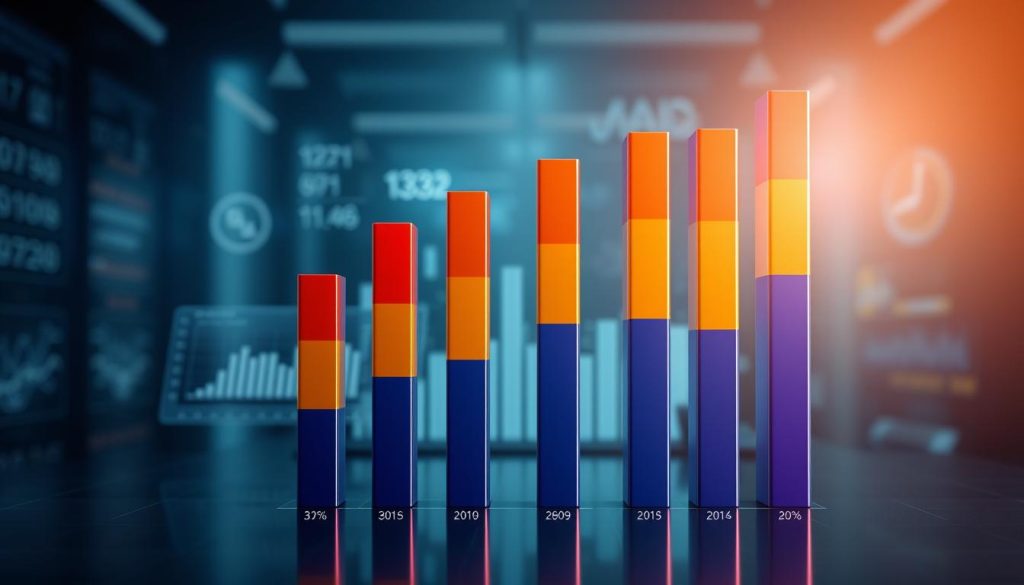
This graph shows the different levels of AI prediction reliability in various situations. It proves that even if AI is really powerful, it’s not always perfect.
Using AI wisely means knowing its limits and setting realistic expectations for its predictions. By understanding its strengths and weaknesses, we can integrate AI better. This builds trust and increases its usefulness.
Building Robust AI Systems
For those working on building reliable AI, it’s key to use smart methods for preventing AI mistakes. This means working with lots of good quality, varied data and clear algorithms. Doing so lays the groundwork for continuous AI improvement.
Best Practices for Preventing Errors
Reducing errors in AI starts with bringing in top practices from the start. Key steps include detailed testing, using varied data to prevent bias, and setting up strong feedback systems. These systems help improve AI over time.
Continuous Learning and Improvement
The idea of continuous AI improvement means AI systems get better by using new data, learning from mistakes, and adapting. This keeps AI tools effective and trustworthy. It’s especially vital in critical areas like healthcare and finance.
| Strategy | Description | Impact on AI Reliability |
|---|---|---|
| Enhanced Data Sets | Using diverse and comprehensive data sets to avoid biases and improve judgment accuracy. | Improves the breadth of AI’s understanding, leading to fewer mistakes. |
| Transparent Algorithms | Employing algorithms whose functions and decisions can be easily interpreted by developers and stakeholders. | Increases trust and ease of debugging, thus heightening reliability. |
| Feedback Mechanisms | Incorporating user and real-world feedback to continually refine AI operations and outputs. | Ensures AI systems are updated and reflective of current real-world conditions. |
The Future of AI and Mistakes
Looking ahead, advancements in artificial intelligence are speeding up. This brings lots of chances but also big challenges. How AI and human mistakes interact is changing. This makes us think deeply about their influence on each other. Ethical AI development is key to making fewer mistakes and building trustworthy systems.
Advancements in AI Technology
AI technology is advancing quickly. This shows how fast machines can learn and change. But this speed could also spread existing errors widely. This makes the effects of mistakes bigger. We need strong rules for AI. These should help it learn from mistakes and avoid them before they happen.

The Importance of Ethical AI Development
Reducing AI errors starts with a promise to ethical AI development. This means making AI that follows ethical rules. It should be fair, responsible, and clear. People making and using AI should put these values first. This helps AI do its job well without making society’s issues worse.
| Focus Area in AI Development | Goal | Impact on AI Mistakes |
|---|---|---|
| Enhanced Learning Algorithms | Reduce error rates | Minimizes systemic mistakes and improves reliability |
| Regular Ethical Audits | Maintain transparency and accountability | Helps in early detection of biases and errors |
| Strengthened Data Privacy Measures | Protect user data | Prevents breaches and misuse, fostering trust |
As we think about the AI future implications, it’s clear we must keep learning and getting better. If we face these challenges, AI’s future will be about fewer mistakes. It will also bring more trust and reliability in the technology we use every day.
Educational Initiatives for AI Understanding
In today’s world, knowing about artificial intelligence (AI) is a must. Programs that teach us about AI help make sure we can use this tech the right way. They add Media and Information Literacy to the mix, helping us think critically about AI systems.
These efforts teach us not just how AI works, but also why knowing its errors matters. Groups like UNESCO are starting campaigns. They want everyone to understand AI’s good and bad sides.
- Teaching AI Literacy
Encourages us to think deeply and learn how to spot when AI goes wrong. It’s about understanding how AI thinks and knowing its mistakes. - Resources for Learning About AI Mistakes
Offers materials to help us spot and get the hang of AI errors. This makes us more ready to handle and reduce AI risks.
By focusing on AI education, we’re aiming to use AI in smart and ethical ways. Including Media and Information Literacy in our lessons is crucial. It helps create a society that’s not just tech-savvy but also thoughtful and careful.
Conclusion: The Complexity of AI Mistakes
We’ve learned a lot about artificial intelligence and how it can make mistakes. Despite this, we shouldn’t shy away from using AI. Mistakes remind us to stay alert and value human judgment in important areas. As AI becomes a bigger part of our lives, we need to keep a balanced view. We should admire AI’s skills in computing and analyzing big data. Yet, we must not overlook its limits and chances for error.
Keeping a balanced view on artificial intelligence is key. It means recognizing both its power and the care it needs. Using AI safely involves understanding its risks, checking data quality, and how it decides. This helps reduce errors and use AI wisely. The synergy of tech advances and human supervision shows the importance of working together with AI.
Understanding AI is crucial, especially when we face challenges with information truthfulness. A smart approach to AI helps us be careful about its conclusions, ensures openness, and supports its growth. In summary, as AI becomes more involved in society, we must embrace its strengths. At the same time, we should wisely manage its flaws by combining our excitement with careful planning.
FAQ
What Is Artificial Intelligence?
How Do AI Systems Learn?
What are common algorithms used in AI?
How can we define an AI mistake?
Are all unexpected results from AI considered mistakes?
Can you provide examples of AI mistakes?
What are some real-world implications of AI mistakes?
Why is human intervention important in the context of AI?
Can AI systems improve their accuracy over time?
What factors can negatively affect AI performance?
What are misclassifications in machine learning?
How can AI misinterpret natural language?
What is algorithmic bias, and how does it occur?
Can we trust AI to always make accurate predictions?
What best practices can help build robust AI systems?
How can advancements in AI technology affect mistakes?
Why is ethical AI development important?
How can we teach AI literacy?
What resources are available to learn about AI mistakes?
How should we approach AI considering its capabilities and mistakes?
What is the significance of embracing AI with caution and understanding?
About the author : virtual-glasses