What are AI Risks?
Artificial intelligence (AI) shines as a beacon of progress in our world. It brings solutions where there seemed none before. Yet, we must ask: What are AI risks? As the creators of these advanced technologies, we face the duty to address potential artificial intelligence dangers. The very tools meant to advance us could also pose existential threats from AI, challenging the core of our society.
Diving deeper, we find many risks lurking behind AI’s benefits. There’s real concern over AI decisions mirroring human bias. The threats to our privacy and safety are serious too. As AI weaves into our daily lives, understanding these dangers becomes critical. We aim not to stop progress but to guide it wisely.
The power of AI lies in its ability to learn, evolve, and maybe even surpass human intelligence. This potential makes AI both amazing and daunting. The idea of machines outsmarting human control isn’t just fiction—it’s a real worry. Join us as we delve into the complexities of AI dangers. Together, let’s ensure AI serves as a beneficial force, not a foe.
Key Takeaways
- Identifying the full spectrum of risks associated with AI is crucial for fostering safe technological advancement.
- Biased algorithms can perpetuate harm by mirroring existing social inequities.
- AI presents unique challenges to privacy and security that require innovative and proactive solutions.
- Tackling the existential threats from AI demands a collaborative approach, engaging experts across various fields.
- Establishing ethical frameworks and regulations is paramount to guiding AI development and integration.
- Understanding historical AI incidents provides valuable insights for preventing future AI-related mishaps.
Understanding the Nature of AI Risks
To fully grasp AI risks, we must first understand what they include and their importance. These risks range from data breaches to unfair decision-making, affecting many areas of society and business. To deal with these issues, a deep knowledge of AI and its impact on ethics and society is essential.
Definition and Scope of AI Risks
AI risks are the harmful outcomes from AI system operations that could affect safety, security, or ethics. They might come from problems in how algorithms are made, how data is used, or how the systems learn from real-world data. AI’s ethical concerns are significant, leading to issues like privacy invasions and increases in social and economic inequality.
Historical Context and Precedents
Looking back, we see technology advances often outstrip the growth of rules and ethical guidelines. The nuclear arms race is a key example, showing the dangers of tech growth focused on power rather than global safety. Today’s rush by countries and companies to lead in AI recalls this, underscoring the need for strong safety measures in AI.
Types of AI Risks
Artificial intelligence (AI) is becoming more common in many fields. This growth brings complex challenges and unintended consequences. There’s a huge need for strong AI governance. Solutions are necessary to ensure AI matches human values and ethics.
Unintended Bias in Algorithms
Unintended bias is a big risk with AI. It can cause AI systems to unintentionally mirror existing prejudices. This is especially a problem in hiring. Algorithmic bias might unfairly exclude people based on race, gender, or age. This happens because of uneven training data or imperfect algorithm design.
Data Privacy Concerns
AI systems collect and use huge amounts of data, which raises privacy risks. They might keep sensitive information longer than needed, risking breaches. Protecting data privacy is a big part of AI governance. It demands strict rules and procedures to keep individual information safe as AI technology grows.
Security Vulnerabilities
AI systems face many cyber threats. These can lead to serious problems in the real world. Threats range from hacking autonomous vehicles to disrupting AI-controlled systems. To fight these threats, focused AI governance is vital. It aims to protect systems from cyberattacks and fix security flaws in AI technology.
Different AI risks call for deep understanding and proactive management. It’s important to make AI fit well with society’s rules and privacy needs. Setting up solid AI governance and solving the AI alignment issue are key. They help prevent and lessen these risks effectively.
Ethical Implications of AI
The rise of artificial intelligence (AI) introduces several ethical challenges. As AI technology progresses, we must carefully consider both moral responsibility and the economic effects. These include job losses due to automation. Here, we delve into these important issues to better grasp our new reality.
Ensuring moral responsibility in AI development is key to making technology work for everyone’s benefit while reducing harm. It’s crucial for those creating and managing AI systems to focus on transparency, accountability, and public welfare.
Technological unemployment from AI poses another significant issue. Automation risks replacing jobs across various industries. This change threatens not just individual incomes but the entire economic structure on a global scale.
| Aspect of AI Impact | Current State | Future Projections |
|---|---|---|
| Moral Responsibility | Focus on ethical AI design and deployment | Increased global standards and regulations |
| Job Displacement | Rising in manufacturing and retail | Expansion into service sectors and professional fields |
The conversation about superintelligence risks also highlights ethical concerns. The idea that AI could someday outsmart humans brings its own set of challenges and uncertainties. To manage these risks, we need foresight, strong governance, and worldwide collaboration. Only then can we responsibly use AI’s capabilities.
In conclusion, as AI becomes an integral part of our lives, focusing on ethical issues and lessening the bad economic effects is crucial. Technological unemployment from AI is one such impact. Our path to a cooperative future with AI depends on our strategic approach to these critical matters.
Technical Risks Associated with AI
Exploring artificial intelligence (AI) leads us to two major points: AI reliability issues and control dynamics. These technical challenges are crucial. They shape how AI will work in different areas in the future.
Reliability and Performance Failures
Trust in AI comes from how reliable it is. If AI doesn’t work right or as expected, people get worried. These worries can range from small problems to big risks for safety.
Different things cause these failures. Poor data quality, mistakes in algorithms, and unexpected problems in real-world use are a few reasons.

Control and Autonomy Issues
The balance between control and autonomy in AI is a tricky issue. AI systems can now make decisions on their own. This was something only humans did before.
This change brings up safety concerns. How do we make sure we can still oversee these advanced systems?
| Issue | Implication | Potential Solution |
|---|---|---|
| Algorithmic Errors | Unreliable AI performance | Rigorous testing and validation |
| Autonomy in decision-making | Potential loss of human oversight | Implement layered control mechanisms |
| Data Quality Issues | Misleading AI outputs | Enhanced data verification processes |
To tackle AI reliability issues, we need collaborative action. This means better tech solutions and strong rules. These steps will keep AI safety concerns in check.
Regulatory and Governance Challenges
Understanding the rules of AI is more important than ever as technology grows. Today’s AI rules show big AI regulatory hurdles. They also show the need for rules that can change and grow, keeping AI accountability strong.
Current Regulations Surrounding AI
Now, there are rules like the European Commission’s Ethics Guidelines for Trustworthy AI. Also, the OECD AI Principles are in place. These aim to be the world standard for how AI should behave and be fair. They cover using AI the right way, keeping data safe, and being open about how AI works. Yet, as AI moves fast, these rules can’t always keep up. This means we must always be thinking about what rules we need next.
Need for Comprehensive Frameworks
To really take on AI regulatory hurdles, we need new, big ideas for rules. These new rules have to solve today’s problems and be ready for tomorrow’s tech too. We should bring everyone into the conversation. This includes people who make laws, people who build tech, people who study ethics, and everyone else. Getting everyone’s ideas can help us agree on what AI accountability should look like.
| Aspect | Current Frameworks | Proposed Improvements |
|---|---|---|
| Scope of regulation | Limited to specific AI applications | Expand to include emerging AI technologies |
| Stakeholder involvement | Primarily regulators and AI developers | Increase public and sector-specific stakeholder participation |
| Adaptability | Rigid guidelines | Dynamic, outcome-based regulations |
Risks in Specific Industries
Artificial intelligence (AI) comes with a unique set of challenges in different sectors. Each industry has its own risks when AI technologies are misused or fail. Knowing these AI industry-specific dangers is vital for setting up strong AI governance.
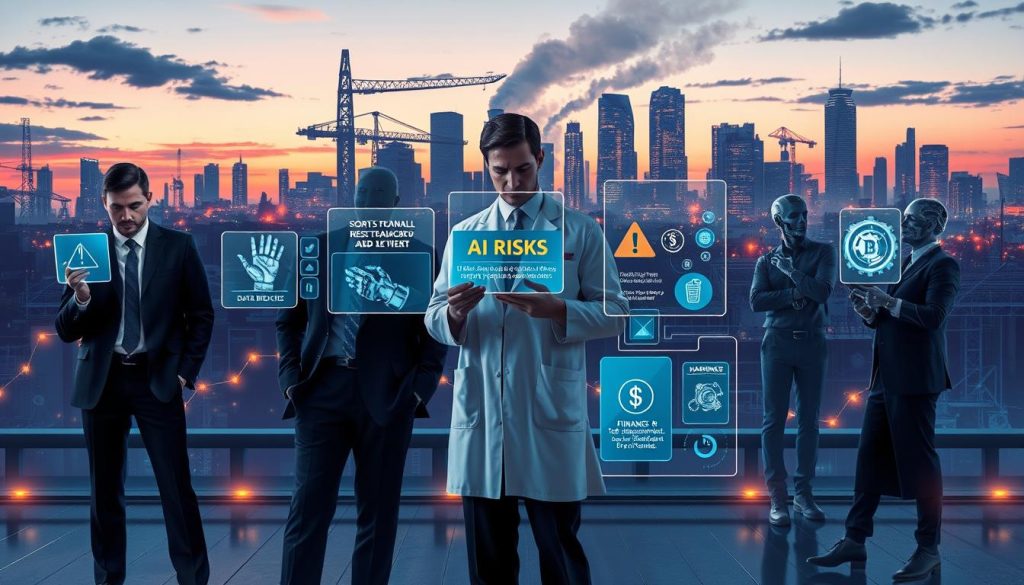
In healthcare, AI is changing things fast with new ways to diagnose and care for patients. But, this can also put patient safety at risk if AI systems make biased or wrong decisions.
The financial sector uses AI for risk assessment and customer service. Yet, this opens doors to AI-driven fraud and security issues. These problems could shake up the financial world.
Autonomous vehicles are getting ready to hit the roads in big numbers. They need to process huge data amounts correctly to keep people safe. Failing to manage AI in these vehicles can lead to serious safety risks.
| Industry | AI-Driven Risk | Governance Needs |
|---|---|---|
| Healthcare | Bias in diagnostics leading to patient safety risks | Strong ethical oversight and validation protocols |
| Finance | Increased risk of sophisticated fraud | Enhanced cybersecurity measures and fraud detection systems |
| Autonomous Vehicles | Decision-making errors impacting public safety | Robust regulatory standards and real-time decision auditing |
Handling these AI industry-specific dangers needs a strong and flexible AI governance plan. This plan must keep up with the quick changes in AI technology across different fields.
The Potential for Misuse of AI
The quick growth of artificial intelligence brings challenges, including its misuse. Different sectors could use these technologies in harmful ways. This may hurt society’s rules and people’s privacy.
AI misuse raises alarms, especially with the making of deepfakes. These fake but realistic images or videos can trick people. They can also harm public figures or change election results, raising deepfake risks.
Deepfakes and Misinformation
Deepfakes pose a big risk by spreading false information. These fakes look so real that they can easily cause confusion. They might wrongly show politicians or celebrities, hurting public trust severely.
Surveillance and Privacy Erosion
Another big problem with AI is surveillance. AI can watch and track people like never before, often without their permission. This can greatly invade personal privacy and freedom.
AI misuse in creating deepfakes and surveillance shows the need for strong legal and ethical rules. Safe AI use is crucial to fight these threats.
Mitigation Strategies for AI Risks
In the evolving world of artificial intelligence, it’s crucial we manage AI risks well. We need strong ethical guidelines and governance to prevent potential issues.
AI ethical guidelines are key in developing these strategies. They make sure AI respects our values and rights. This helps AI to fit well with what society expects.

To govern effectively, organizations should make detailed policies. These should cover AI’s broad use and plan for its future.
| Strategy | Details |
|---|---|
| Fairness Tools | Implement tools that actively detect and mitigate algorithmic biases to ensure AI fairness in all applications. |
| Bias Mitigation Processes | Develop systematic approaches to minimize biases, ensuring that AI systems perform equitably across diverse user groups. |
| Secure-by-Design Principles | Build AI systems with inherent security features to protect against cyber threats from inception through deployment. |
| International Standards | Adopt and implement global standards to regulate AI use in sensitive areas like cybersecurity and warfare. |
Following these strategies, supported by AI ethical guidelines, offers a clear way to manage AI risks. It prevents misuse and gains public and stakeholder trust in AI.
Case Studies of AI Risks
In the world of artificial intelligence, some events stand out. They show why it’s vital to keep a close watch and test systems well. AI examples point out the mistakes that can cause big, unexpected problems. As we use technology more in our daily lives, we must learn from these AI mishaps. It’s key to protect both people and our communities.
| Incident | Description | Lessons Learned |
|---|---|---|
| Fatal Autonomous Vehicle Crash | A misinterpretation of sensor data led to a collision with a pedestrian. | Enhanced validation procedures for AI systems in dynamic environments are critical. |
| Wrongful Arrest Due to Facial Recognition | Misidentification by AI-based facial recognition technology led to wrongful arrest. | Reassessment of AI accuracy and biases, especially in critical applications like law enforcement. |
These AI stories don’t just reveal the dangers of the tech. They also teach important lessons on updating safety measures. By studying these mistakes and taking cues from AI mishaps, creators and lawmakers can forge AI that’s safe and right. This way, AI’s future moves will fit better with what society expects.
Future Outlook on AI Risks
As we move ahead, the future of AI risks is closely linked with new technologies. These bring challenges that need us to act early. Knowing about these risks is key in preparing for AI advancements. It ensures benefits for society while reducing dangers. This discussion is crucial as AI changes many areas of life.

AI’s growth brings better features but also calls for thorough risk checking. We see both chances and the need for careful planning. The table below shows new technologies, their risks, and how to get ready for them.
| Emerging Technology | New Risks | Preparation Strategies |
|---|---|---|
| Quantum Computing | Enhanced hacking capabilities | Development of quantum-resistant encryption |
| Autonomous Robotics | Job displacement, ethical concerns in warfare | Implementation of ethical standards, reskilling programs |
| Neural Networks | Unintended bias, loss of data privacy | Transparent algorithms, stricter data regulations |
| AI-enhanced Biotechnology | New forms of biohacking | Robust biosecurity measures |
This table not only highlights the future of AI risks but also the huge need to prepare for AI advancements wisely. By looking ahead at these issues, we can build a tech world that’s bold and safe. This helps protect us from the dangers as AI becomes a bigger part of our lives.
Conclusion: Navigating the Landscape of AI Risks
This article has shown the different challenges AI presents. Leaders, lawmakers, and tech experts need to carefully handle AI risks. This way, we can use AI’s power but also avoid big dangers. It’s all about finding the right balance to protect people and encourage new ideas.
Tools like IBM Watson Governance™ help with managing AI risks. They show a dedication to making AI safe and clear for everyone. Using such tools helps in dealing with AI’s dangers. It also ensures AI is used fairly and protects privacy.
The journey to a future with AI is ongoing. Everyone involved with AI must work together and learn as we go. Our success in using AI safely depends on this teamwork. With the right approach to AI risks, we can create a better future for all.
FAQ
What are the major risks associated with artificial intelligence?
How do historical technological races inform our approach to AI risks?
What types of biases can occur in AI algorithms and how do they impact society?
How are data privacy and security compromised by AI technology?
In what ways does AI pose ethical challenges?
What economic impacts could AI have on the job market?
What are the technical risks associated with AI?
Why is there a need for comprehensive frameworks in AI governance?
How might AI impact specific industries such as healthcare, finance, and transportation?
What issues arise from the misuse of AI technologies like deepfakes and surveillance?
What measures can be taken to mitigate AI risks?
What important lessons have we learned from past AI failures and accidents?
How should we prepare for emerging AI technologies and future risks?
What tools and resources are available to help navigate AI risks?
About the author : virtual-glasses