
What is Weak AI? Understand the Basics
In a world filled with dreams of smart machines, one big question stands out: What is weak AI? Unlike the idea of smart robots, weak AI, or non-sentient AI, may not seem as exciting. However, it’s just as groundbreaking. We’re diving into the world of specialized AI technology. These systems are super good at certain jobs. They show us the truth behind the magic. From talking to your phone to it finishing your sentences, weak AI is the unseen power driving us to a smarter future. In that future, AI doesn’t just learn; it shines in what it’s made to do.
But let’s take a step back from dreaming about the future and look at what we have today. Weak AI doesn’t try to act like humans; it aims to be super good and accurate at specific tasks. It’s in our homes and offices, making things better and more customized. It might not be alive, but it’s definitely giving a new spark to our technology.
Key Takeaways
- Grasp the concept of weak AI and how it differs from the sentient expectations of strong AI.
- Discover the pervasive role of specialized AI technology in our daily gadgets and systems.
- Recognize weak AI’s significant role in refining business processes and customer experiences.
- Identify the discrete, task-oriented nature of non-sentient AI beyond science fiction.
- Contemplate the broader implications of weak AI on future technological advancements.
Definition of Weak AI
Weak AI, or artificial narrow intelligence, focuses on performing a single task smartly. It doesn’t try to mimic human intelligence across many tasks like strong AI does. Instead, weak AI is great at dealing with one specific job.
What sets weak AI apart from strong AI is its simplicity. Systems like symbolic AI follow strict rules and can’t think beyond those rules. This makes them perfect for jobs such as language translation or handling standard customer service questions.
Difference from Strong AI
On the other hand, strong AI is all about mimicking human brain power. It can reason, solve problems, and learn new things just like we do. This type of AI is designed to handle any task a person can, making it much more complex than weak AI.
Examples of Weak AI
- Customer service chatbots for answering common questions.
- Facial recognition software for increasing security.
- Engines that recommend products based on what you’ve liked before.
Limitations of Weak AI
Weak AI’s main issue is its narrow focus. It’s great within its set tasks but struggles with anything new or unexpected. Because it can’t learn beyond its initial programming, it can make mistakes or be less efficient when faced with unfamiliar situations.
This look into weak AI’s definition, its differences from strong AI, examples, and its limitations helps us appreciate its role in today’s tech. It shows why it’s key to design AI systems that meet specific needs while understanding their limits.
Applications of Weak AI
Weak AI is spreading across many sectors. It shines in specialized areas where narrow AI kicks in. Rule-based AI systems, for example, are changing the game in customer interactions and data analysis.

Starting with customer support, rule-based AI lets chatbots handle questions and problems fast. This cuts down the need for people to step in, making things quicker. Over time, these chatbots get better at helping customers through learning from each interaction.
Then there are virtual assistants like Siri and Alexa. They have become a part of our everyday lives. They do tasks like reminder setting, controlling smart devices, and giving updates. And they do it all based on what they know about the user’s likes and prior requests.
Weak AI also powers recommendation systems. These are key for online shopping and streaming services. They look at lots of data to recommend products or content that the user will probably like. This greatly improves how much users like and use these services.
| Feature | Impact of Rule-Based AI Systems | Impact of Narrow AI Applications |
|---|---|---|
| Customer Support | Increases efficiency, reduces operational costs | Improves customer service quality and speed |
| Virtual Assistants | Personalizes user interactions, simplifies tasks | Enhances daily convenience, drives adoption of smart tech |
| Recommendation Systems | Optimizes content and product suggestions | Boosts user engagement and loyalty through tailored experiences |
These uses of Weak AI, through rule-based and narrow AI, show how powerful AI can be. They target and improve specific processes. This helps both users and the people providing services.
How Weak AI Works
To understand how weak AI operates, it’s crucial to know about the methods and technologies it uses. This includes the machine learning vs weak AI debates and the use of specialized AI technology. At its heart, weak AI is built to do specific jobs. It follows pre-set rules and learns from tons of data.
We’ll explore the algorithms and machine learning techniques key to how weak AI works. As specialized AI technology, it differs greatly from tech trying to think like humans.
Algorithms and Machine Learning
Algorithms and data training are vital to how weak AI functions. Algorithms are sets of rules that help AI learn from data, make decisions, and do tasks. The better the algorithms, the better and more efficient the AI’s performance.
Data Training and Model Building
Data training lets the AI learn by using specific datasets. This step is important because it lays the foundation for how the AI models work. By training over and over, the AI improves its algorithms. This makes it more accurate in doing its jobs.
Task-Specific Functionality
Weak AI aims to excel in jobs it’s specifically programmed for. This task-specific functionality means it’s great at things like recognizing faces, helping through voice, or searching the internet. However, it can’t use what it learns in one context in a different one.
| Feature | Machine Learning AI | Weak AI |
|---|---|---|
| Learning Capability | Continuous learning from data | Limited to specific tasks |
| Application | Broad application in varying fields | Configured for specific roles |
| Flexibility | Adapts based on new data | Constrained to predefined functions |
This table shows the main differences and features that set generalized machine learning AI systems apart from the more focused, specialized AI technology used in weak AI models.
Advantages of Weak AI
Exploring the what is weak AI shows its big role in many fields. This AI is built for specific tasks. It does them more accurately and efficiently than people could do by themselves.
Efficiency in Task Execution
Weak AI is great at doing lots of repeating tasks quickly. It makes things like data checking and answering customer questions quicker. This saves time and reduces mistakes. It’s really helpful in places like banks and hospitals where you need things done fast and right.
Cost-Effectiveness
Using weak AI saves money for businesses. It takes over simple jobs, cutting down on labor costs. Specialized AI technology helps companies spend their money on bigger goals. This helps them make more money and grow smoother.
Enhancements in User Experience
Weak AI changes how we experience technology. It gives us shopping tips and runs smart devices in our homes. By knowing what users like, weak AI makes products better and keeps people happy and interested.
| Feature | Impact |
|---|---|
| Task Automation | Reduces time spent on routine tasks |
| Cost Reduction | Less need for manual labor, lowering operational costs |
| Personalized Customer Interactions | Increases customer satisfaction and loyalty |
Even though it’s a simpler AI type, weak AI’s use shows it’s important today and in the future. As technology and industries grow, weak AI’s role will get bigger and better. Knowing what is weak AI is key for progress and doing well in business.

Limitations and Challenges of Weak AI
Weak AI has changed many sectors. But, it’s not without its issues. Its design and function have major limitations, showing why we need ongoing progress and smart use of technology.
Weak AI systems can’t think like humans. They perform specific tasks and can’t learn new ones beyond what they’re programmed for. This means they rely heavily on the quality and range of their training data. Bad or biased data can greatly reduce AI’s effectiveness. Fixing these issues requires a lot of work or changes to the algorithms.
Ethical considerations are also a big deal with weak AI. AI is used in important areas like healthcare and criminal justice. Its decisions can greatly affect people’s lives. This highlights the need for strong ethical rules and clear methods in AI work.
| Challenges | Implications |
|---|---|
| Lack of General Intelligence | Restricts AI’s flexibility and adaptability across different tasks or problem-solving scenarios. |
| Dependency on Data Quality | Poor or biased data can lead to flawed AI decision-making, impacting fairness and accuracy. |
| Ethical Considerations | Raises concerns about privacy, accountability, and bias, necessitating stringent ethical guidelines. |
We must tackle these issues and ethical concerns to improve AI technologies. Enhancing AI can bring more benefits to society and reduce negatives. This calls for teamwork among tech developers, ethicists, and lawmakers. We need this to achieve responsible and fair AI use.
Future of Weak AI
The future of weak AI looks bright and full of potential. It’s set to deeply change how we use technology daily. It aims to make devices smarter, making our interactions simpler and operations more efficient. It will also merge with other advanced technologies, offering better features.
Specialized AI technology is key to this evolution. It lets systems handle big datasets and operate without humans. This leap in how AI understands and manages tasks will make technology easier and more natural for us to use.
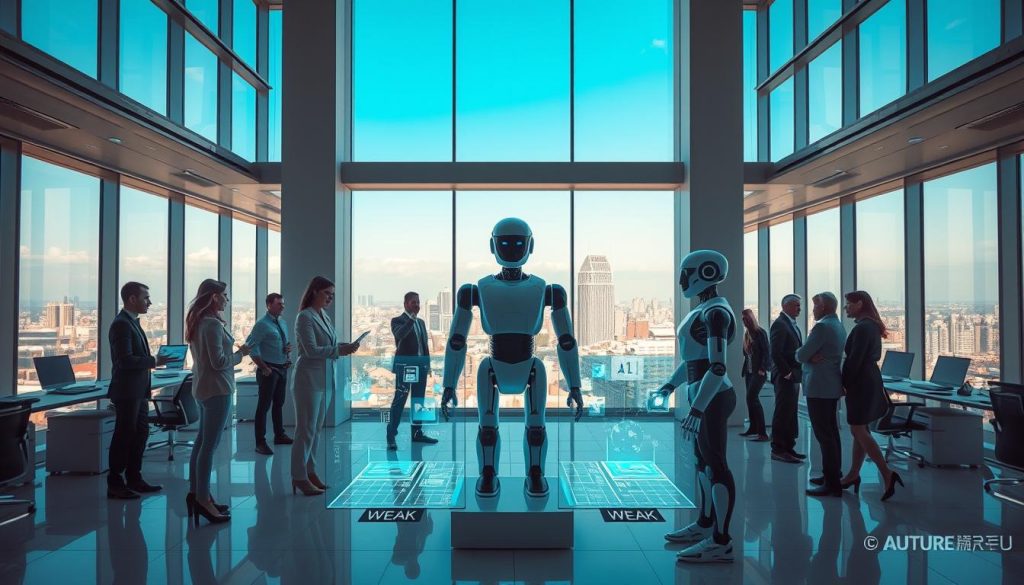
- Trends in Development: There’s a big push to advance weak AI. Investments are flowing in. The goal is to understand data better and make decisions faster than ever before.
- Integration with Other Technologies: Weak AI will merge with other tech like IoT and blockchain. This means more secure, seamless experiences across devices and even using VR for deeper engagement.
- Potential for Improved User Interaction: Thanks to specialized AI, we’ll see devices that know us better. Imagine tech that knows what you need before you do, all in real-time.
The mix of specialized AI with new technologies signals a big shift in our tech future. Weak AI will become a crucial part of everyday life and business, making everything we do smarter and easier.
Comparing Weak AI and Strong AI
In the world of artificial intelligence, weak AI and artificial general intelligence are key concepts. They show big differences in what they can do and aim for. Looking into their basic traits, uses, and the debates around them is essential.
Fundamental Differences
Weak AI, or narrow AI, focuses on specific tasks. It works within set rules and can’t go beyond them. In contrast, artificial general intelligence has the potential to match human intelligence. It could handle any intellectual challenge a person can.
Use Cases and Scenarios
Many things we use every day are examples of weak AI. Things like voice-activated assistants and personalized recommendations on streaming sites. They make everyday tasks faster and more precise. Yet, artificial general intelligence is still more of an idea than reality. It could bring major advances in solving complex problems and making big decisions.
Philosophical Implications
The conversation about weak AI and artificial general intelligence doesn’t stop with technology. It also touches on big questions about consciousness, morality, and how fully thinking machines might change society. These discussions show the deep impact these technologies could have on our lives.
The Role of Weak AI in Society
In our world today, weak AI or non-sentient AI is changing society. It is really noticeable in the job market. Here, it replaces some jobs but also makes new ones. It also makes industries work better by improving how things are done.
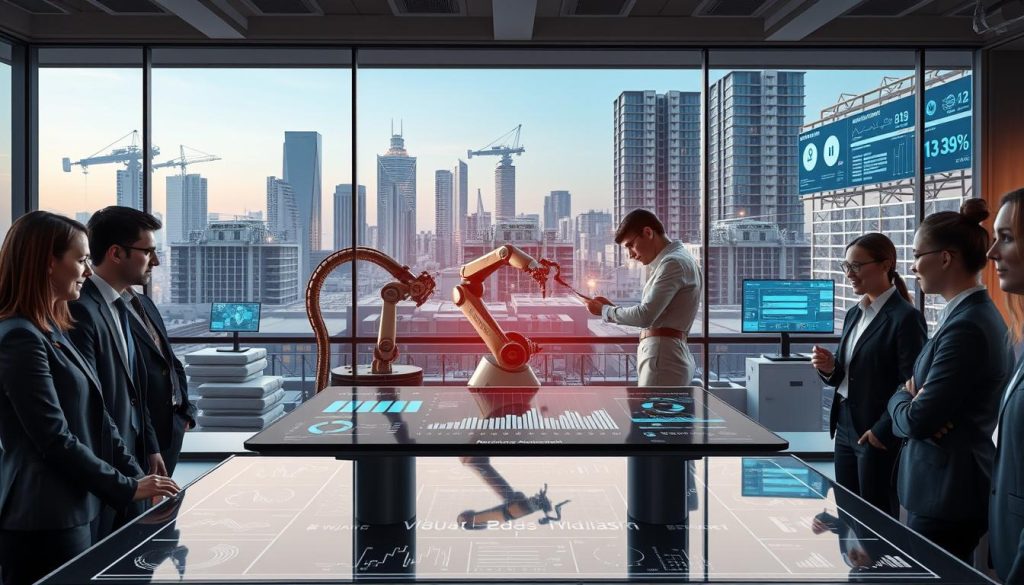
Weak AI is becoming a big part of our everyday lives. It’s more than just technology now; it’s something we rely on. We see its effects in how digital assistants plan our days or smarter home systems save energy.
- Impact on Employment: AI is changing the kind of jobs available, making us adjust to roles that need tech skills. This change emphasizes the good results that come from humans and AI working together.
- Transforming Industries: Non-sentient AI is changing big areas like manufacturing, healthcare, and finance. By working faster and more accurately, it helps these fields do better and innovate.
- Influence on Daily Life: Weak AI makes daily tasks smarter and more efficient. This includes shopping tailored to what you like or better security at home.
As weak AI keeps evolving, it brings both benefits and challenges. It’s slowly becoming a key part of society. Yet, how it will fully affect our economy and way of life is still something we’re trying to understand.
Regulatory and Ethical Considerations
In the world of weak AI, we really focus on regulatory and ethical considerations. It’s important to use it responsibly. We also look at data privacy concerns and accountability as these tools affect many parts of society.
Data privacy concerns lead ethical talks on weak AI. These worries focus on how much personal info AI systems handle. It’s essential to protect this info from misuse but keep the AI effective.
Accountability becomes tricky with AI decisions causing harm. Figuring out who’s to blame—the makers, users, or the AI—is tough. This ties back to the larger ethical considerations about human control over AI.
We need clear rules for using AI responsibly. These rules should guide AI development and use, making sure it’s ethical and respects rights. They should ensure transparency, allow for human checks, and follow legal data security rules.
Finding the right balance with weak AI involves ethical considerations and data privacy concerns. We must always review and adjust rules. This helps AI grow safely while protecting human values and dignity.
Conclusion: The Importance of Understanding Weak AI
We’ve learned a lot about weak AI and its importance. It’s the key to modern tech that affects our everyday life and work. Knowing all about weak AI helps us use it better and know its limits.
Recap of Key Points
Looking back, we see how weak AI powers tools like chatbots and recommendation engines. These tools make things easier and save money, although they don’t think like humans. We also looked at what the future holds for this tech, including its challenges.
Future Outlook
The future of weak AI holds exciting progress and new uses. It’s set to change fields like healthcare and customer service big time. As AI becomes a bigger part of our world, it will revolutionize how we work and interact.
Call to Action: Engage with AI Technology
In this fast-changing tech world, getting involved with AI is a must. For people and companies, using weak AI offers great advantages. So, it’s important to dive into AI, learn its ins and outs, and get ready for its big impact.
FAQ
What is Weak AI?
What are the differences between Weak AI and Strong AI?
Can you provide examples of Weak AI?
What are the limitations of Weak AI?
How are Weak AI systems like customer support chatbots beneficial?
In what ways do virtual assistants utilize Weak AI?
Why are recommendation systems considered a form of Weak AI?
How do Weak AI systems employ algorithms and machine learning?
What does Weak AI’s data training and model building entail?
How is Weak AI tailored to provide task-specific functionality?
What makes Weak AI efficient in task execution?
Why is Weak AI considered cost-effective?
How does Weak AI enhance user experience?
What challenges does Weak AI face regarding general intelligence?
How does the quality of data affect Weak AI?
What are the ethical considerations associated with Weak AI?
What trends are shaping the future of Weak AI?
How is Weak AI being integrated with other technologies?
What potential does Weak AI have for improving user interaction?
What are the fundamental differences between Weak AI and Strong AI?
What are typical use cases and scenarios for Weak AI?
What are the philosophical implications of Weak AI?
How does Weak AI impact employment?
In what ways is Weak AI transforming industries?
How does Weak AI influence our daily life?
What data privacy concerns are associated with Weak AI?
What accountability issues arise with Weak AI?
How are guidelines for responsible use crucial for Weak AI?
What is the importance of understanding Weak AI?
What does the future outlook for Weak AI entail?
How should individuals and businesses engage with AI technology?
About the author : virtual-glasses