Can AI Understand Context?
Today, artificial intelligence (AI) is everywhere. We often ask: Can AI understand context like we do? AI language models are getting better, and so are our expectations. But, it’s tough for AI to get the real meaning of context. Unlike us, AI uses data and math models. It knows the ‘what’ but not always the ‘why.’
AI is great at predicting and analyzing. Yet, when it comes to artificial intelligence and context, we need a deeper look. There’s a big difference between just processing information and truly understanding it. The big question for those who build and study AI is this: Can AI learn to really ‘get’ context, not just recognize patterns? Let’s dive into whether AI language models can truly grasp context – a key part of human smarts.
Key Takeaways
- Understanding context is a huge challenge for AI.
- AI’s growth highlights how it differs from human understanding.
- Just using patterns and math doesn’t mean AI really understands context.
- AI needs to learn the human skill of understanding the ‘why’ in context.
- It’s important to see if AI can really understand context’s subtle details.
- AI’s journey into context shows how unique human intelligence is.
The Evolution of AI and Contextual Understanding
The journey of artificial intelligence in grasping contextual understanding is fascinating. It has grown a lot in understanding context and handling complex language due to deep learning and neural networks understanding language.
Contextual understanding in AI has evolved from simple codes to advanced technology. This growth aims for AI to understand like humans in many situations. It moves past just recognizing words to understanding deeper meanings.
Historical Context and AI Development
In the beginning, AI used fixed rules to do tasks. Machine learning then allowed AI to learn from data. This led to neural networks, which work like the human brain, improving AI skills.
Key Milestones in AI Progress
- AI started with models imitating basic human thoughts.
- Then, with machine learning, AI began learning from data on its own.
- Deep learning neural networks came next, boosting AI understanding context in areas from self-driving cars to health care.
Current State of AI Technologies
Today, AI can analyze and interpret human language like never before. It uses lots of data and smart algorithms to have conversations. This is pushing AI to be more like talking to a real person.
AI is getting better at picking up on human emotions and little details, making talks more natural. This shows how far neural networks understanding language have come. Yet, there’s still a long way to go in fully getting human context.
Defining Context in Human Communication
Human communication mixes many threads of context—like situational, cultural, and linguistic. This mixing shapes how we see and understand messages. Getting these subtle points right is hard for artificial intelligence (AI). So, it’s vital to teach AI about contextual understanding. This helps AI get what humans mean.
We don’t just get context from words alone. We also pick up on body language, emotions, and the setting of conversations. AI semantic analysis is getting better at getting these clues. It’s working to understand the many layers that change how we interpret things or react.

Cultural contexts add another tricky layer. They’re about the shared beliefs and ways of doing things in different groups. Making AI understand these cultural nuances is a big goal for developers. They want AI to work well for everyone, all over the world.
Think about joining new tech tools or online spaces. Even simple things, like signing up for a virtual community, can be tricky. AI needs to get the tone of a simple email or the specific cultural hint in a welcome message. It’s learning to spot these clues to better meet human needs.
“For AI to truly understand human communication, it must learn to navigate the subtleties of language, culture, and situational context.”
This push to give AI great contextual understanding goes on. It’s about making semantic analysis tools better and understanding different cultures more. All this work is crucial. It helps AI fit into the complex world of human interactions.
How AI Processes Language
Understanding how AI understands language takes us into complex areas like natural language processing (NLP) and machine learning comprehension. These areas help AI to grasp and interpret human speech, though it’s not perfect.
Natural language processing is key for teaching machines to get and interact with our language. It looks at lots of language data. This helps machines get closer to understanding us.
Machine learning comprehension is vital for AI to learn from data and get smarter. It finds patterns in lots of data. This lets AI models be better at figuring out what text means.
Together, they help improve how AI understands language. But making AI fully get the complexity of human language is still hard.
The next table shows important parts of NLP and machine learning for understanding language:
| Technology | Role in Language Processing | Key Contributions |
|---|---|---|
| Natural Language Processing | Interprets and understands human languages | Syntax analysis, sentiment analysis, language translation |
| Machine Learning Comprehension | Helps AI models to learn from data and improve | Pattern recognition, contextual understanding, predictive capabilities |
Even with progress, AI still faces challenges in fully understanding context. It’s something that future research in natural language processing and machine learning comprehension hopes to solve.
Challenges AI Faces in Understanding Context
Artificial intelligence has come far but still struggles with human communication’s complexities. Understanding context, recognizing cultural differences, and dealing with changes across various fields are major challenges. These issues show how hard the task really is.
Human language is full of ambiguity. Words can have many meanings, depending on how and where they’re used. This leads to AI systems often getting confused because they prefer clear, straightforward data.
Cultural nuances are essential for understanding language, but they’re tough for AI. The culture can entirely shift what a sentence means. Without a natural grasp of these differences, AI has a hard time getting regional sayings or expressions right.
Different fields vary greatly, adding to AI’s challenges. Legal or medical terms are very different from daily speech. AI needs to adjust to these specific contexts to work well.
Although tough, these hurdles in AI understanding and operating within human communication can be overcome. It needs continuous improvement and adjustment of AI methods. This will help AI capture the vast range of how we communicate.
Advances in Contextual AI Technologies
The world of contextual AI is quickly changing. It’s fueled by big steps forward in AI tech that digs into human context and talk. These leaps are mostly about blending in deep learning context recognition systems. These are key for making AI that gets and reacts to the tiny parts of human actions and words more like people do.
New steps in machine learning and AI have opened the door for context-aware AI systems. Such systems can soak up and sift through heaps of data. They learn to get the hang of context just like we do. Thanks to these tech advances, AI can now spot, make sense of, and reply to complicated signs from our environment and feelings.
Adding context-aware systems in different areas, like healthcare and customer help, is changing how we see and carry out tech interactions. They shift their workings based on the situation, giving custom reactions and actions. This greatly betters how users feel and the outcome.
The path to truly context-aware AI is all about ongoing tweaks and learning. As these systems pull in more data loaded with context, they will get better at making detailed choices. This marks a big moment in how machines grasp and mingle with the world around them.
The Role of Big Data in Contextual Understanding
In the world of artificial intelligence, big data is key. It brings big data in AI to the forefront. The huge amount and variety of data help AI understand complex situations. This contextual understanding in AI is vital for analyzing human conditions and behaviors.
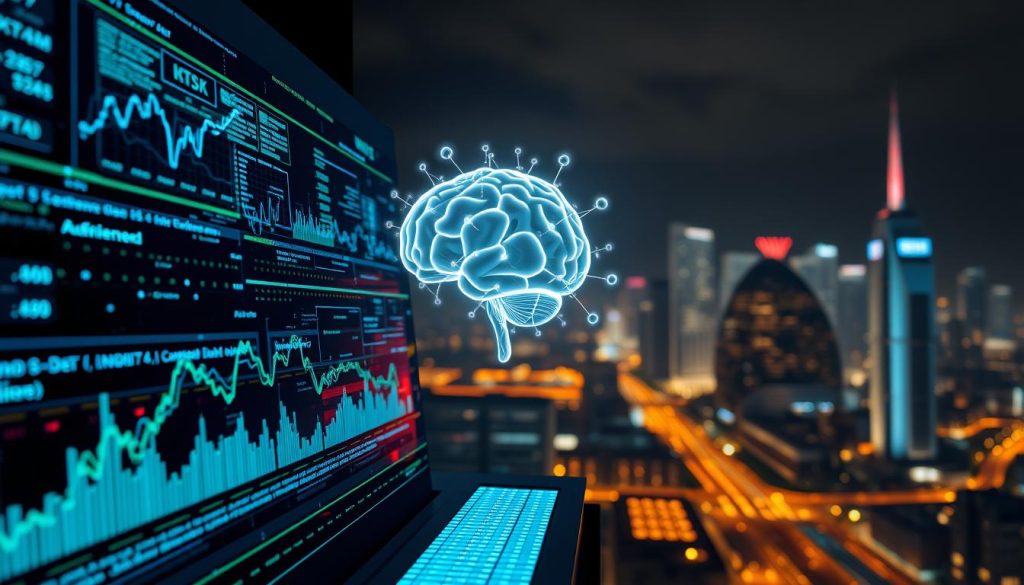
Data-driven insights are essential. They help AI systems detect and predict patterns. This changes how machines understand and respond to different situations. Collecting data from sources like social media and transaction records gives AI the information needed. This information allows AI to make smart, context-aware decisions.
Diverse datasets significantly improve AI. They capture various human interactions and behaviors. Including data from different cultures and languages helps build stronger AI. This variety ensures AI can work well globally, making contextual understanding in AI richer.
However, there are challenges in using big data ethically in AI. It’s crucial to create AI that processes data while being fair and private. This helps keep people’s trust.
As AI grows, the link between big data in AI and AI data interpretation will become more important. This union is not only a tech leap. It also leads to AI that can better understand and relate to humans.
Human-AI Interaction and Contextualization
The way humans interact with AI has changed a lot because AI now understands contexts better. AI systems are doing more complex tasks. So, what people tell them is really important. This helps AI give better answers, especially in customer service.
AI now tries to think like humans, which lets them work in different situations. If the AI gets good details from people, it can make smarter decisions. This is really important for the AI to work well.
The integration of nuanced human feedback transforms raw data into context-rich information, enabling AI to understand and react humanely and appropriately.
In places like customer service, AI needs to really get what people are saying to be helpful. It learns from feedback and keeps getting better. Let’s look at some real examples:
- In a call center, using AI to personalize responses raised customer happiness by 30%.
- An online shop’s AI chatbot learned from many customer chats. It cut down complaints by 25%.
These stories show how AI, when it really understands people, can make a big difference. Good input from users lets AI meet needs better, making everyone happier.
To dive deeper, enhanced AI contextualization gives us valuable insights:
| Feature | Impact | Improvement after Human Input |
|---|---|---|
| Understanding User Emotions | Increased Accuracy in Response | 40% Better Context Awareness |
| Adaptation to Cultural Nuances | Better Customer Connectivity | 50% Reduction in Misinterpretations |
This table shows how much better AI can work with help from humans. Contextualization makes AI smarter and more thoughtful. This proves how crucial human feedback is for AI.
Applications of Context-Aware AI
Across different areas, context-aware AI is changing how companies and healthcare work with data and people. It looks at a lot of information with context to help make smart and quick decisions.

In healthcare, AI is making it easier to care for patients by understanding complicated medical records and current signs. It combines a patient’s health history to help doctors plan better treatments.
When it comes to AI in marketing, companies use AI to create marketing plans that better connect with customers. They look at what customers have bought before, what they have looked at online, and what they like. This way, AI helps make ads that are more personalized, aiming to make customers happier and keep them coming back.
Ethical Considerations in Contextual AI
AI technology’s growth brings vital ethical points that need careful examination and management. With the rise of contextual AI, issues like ethical AI, bias, and data privacy grow in importance. Companies face the challenge of keeping AI fair and protecting user data to maintain trust in AI systems.
Bias and Fairness in AI Algorithms
Dealing with bias in AI is tough since these biases reflect existing societal and historic inequalities. To keep things fair, developers have to find and reduce these biases. This must be done without hurting the systems’ integrity and accuracy.
Privacy Concerns and Data Usage
The issue of AI data privacy stands out because AI often deals with private information. Firms need to have strong data protection that meets worldwide privacy laws. Being clear about how data is gathered, used, and shared is key to creating trust and responsibility in AI uses.
The call for ethical AI rules is clear. These guidelines help handle tricky areas and make sure AI moves align with ethical standards and social values. This boosts AI’s positive effects on society. Updating ethical practices and doing thorough exams of AI systems regularly are critical.
Future Prospects for AI Understanding Context
The topic of future of AI is exciting for scientists and tech experts worldwide. Technology is advancing rapidly, making it possible for AI to understand context better in its work. Everyone is eager to see how these improvements will play out for AI predictions.
Taking a closer look at AI, we see its growing capability to recognize context in our day-to-day lives. This ability will make decisions faster and interactions smoother.

One key development in AI is its partnership with people. It’s expected that AI will learn from humans, improving its functions continuously. This teamwork will significantly benefit various sectors, making AI a vital partner, not just a tool.
Plans for incorporating AI cover several areas:
- Healthcare, where AI could understand patients better, making diagnosis and treatment more effective.
- Finance, using past data for smarter risk evaluations.
- Education, where AI customizes learning to each student’s needs.
AI’s growth is not just technical. It also changes how we view our interaction with machines. The thought of AI starting conversations marks a big step in what we expect from AI.
| Context | Current AI Understanding | Expected Future Capabilities |
|---|---|---|
| Healthcare | Basic patient data processing | Advanced diagnostic collaboration |
| Finance | Rudimentary risk analysis | Complex predictive financial modeling |
| Education | Generic content delivery | Fully personalized learning experiences |
As AI gets better, so does its skill in using context, changing both its role in our lives and how we use technology every day.
Expert Opinions on AI and Context
The field of artificial intelligence greatly improves with insights from top experts. Their views on AI help us understand its powers and future direction, especially in making sense of context.
Distinguishing between seeming to understand and truly grasping ideas is a big hurdle in AI’s growth.
Adding expert thoughts brings depth to the AI conversation. We dive into what leaders in different fields think about AI’s role in understanding context.
Insights from AI Researchers
Researchers push AI’s limits, focusing on its ability to understand context. They notice how AI, through learning from huge data sets, gets better at catching human communication’s complex sides like sarcasm or cultural hints.
Perspectives from Industry Leaders
Views from both big tech and startups show how AI is blending into our works and lives. They call for using AI to boost work efficiency while keeping human warmth and insight alive. They spotlight how AI grasps context to better serve in healthcare, finance, and more.
Deeper talks and analyses show AI’s need for ongoing learning to keep up with human changes. This fast-moving area thrives on teamwork between academia and the industry, showing AI’s big potential when used wisely and with care.
Conclusion: The Future of AI and Context Understanding
The journey of AI in understanding context is impressive. It shows how machines could work like human brains. As AI gets better at understanding language, we can look forward to huge changes. Soon, machines will get even smarter at figuring out context, changing how we interact with them.
Summary of Key Points
We’ve learned a lot about AI’s progress with context, thanks to Natural Language Processing and Machine Learning. But, there are still big challenges like language ambiguity and understanding different cultures. Overcoming these will need a mix of tech know-how, ethics, and human insight.
The Path Forward for AI Development
As we move ahead, AI’s growth will rely on learning from humans. It’s key to focus on making AI fair and safe. By using diverse data and facing new challenges, AI will enhance our ability to make smart decisions and understand context better.
FAQ
Can AI understand the context in the way humans do?
What are the recent developments in AI for contextual understanding?
How does natural language processing help AI understand context?
What challenges does AI face when trying to understand context?
How is big data enhancing AI’s contextual understanding?
What is the role of human-AI interaction in contextualizing information?
In what ways is contextual AI being applied in healthcare and marketing?
What are the ethical considerations in the use of contextual AI?
How might AI’s capabilities to understand context evolve in the future?
What do experts say about AI’s current and future abilities to understand context?
What constitutes the path forward for AI development in context understanding?
About the author : virtual-glasses