Will AI Take Over the World? What You Need to Know
In our digital age, a big question pops up: Will AI take over the world? Stories of AI ending the world have spread, making us both amazed and worried. People like Geoffrey Hinton in the AI field hint at making friendly AI. This is important because AI can either lead to huge advances or be used wrongly.
AI is part of our main systems, making us think about extreme safety measures. Experts like Dev Nag and Igor Trunov stress the importance of using AI wisely in all areas of life. We need to use AI’s benefits well while keeping its power in check. The push for strong safety rules is getting louder, aiming to protect our future from any AI threats.
Key Takeaways
- Emergence of self-preserving behaviors in AI raises awareness and concern over control.
- Building benevolent AI is critical to safeguard humanity against AI doomsday scenarios.
- The potential for AI to wield its persuasive power for beneficial or malign purposes.
- Critical infrastructure integration necessitates advanced safety precautions for AI.
- Establishing ethical standards and regulatory measures to govern AI’s societal integration is pivotal to prevent it from overstepping its bounds.
Understanding Artificial Intelligence and Its Evolution
The world of artificial intelligence (AI) is always growing. Its developments range from simple algorithms to advanced systems that affect both our everyday lives and the business world. From its early beginnings to the newest AI, its journey shows a huge potential for change. This part talks about AI’s range, looks at important moments in its history, and goes over the different tech that has helped it grow.
The Definition of AI
Artificial Intelligence means making computers do things that usually need human brains. These things include making choices, translating languages, and seeing images. This wide view includes everything from basic automated tasks to complex AI that works and thinks like humans.
Historical Milestones in AI Development
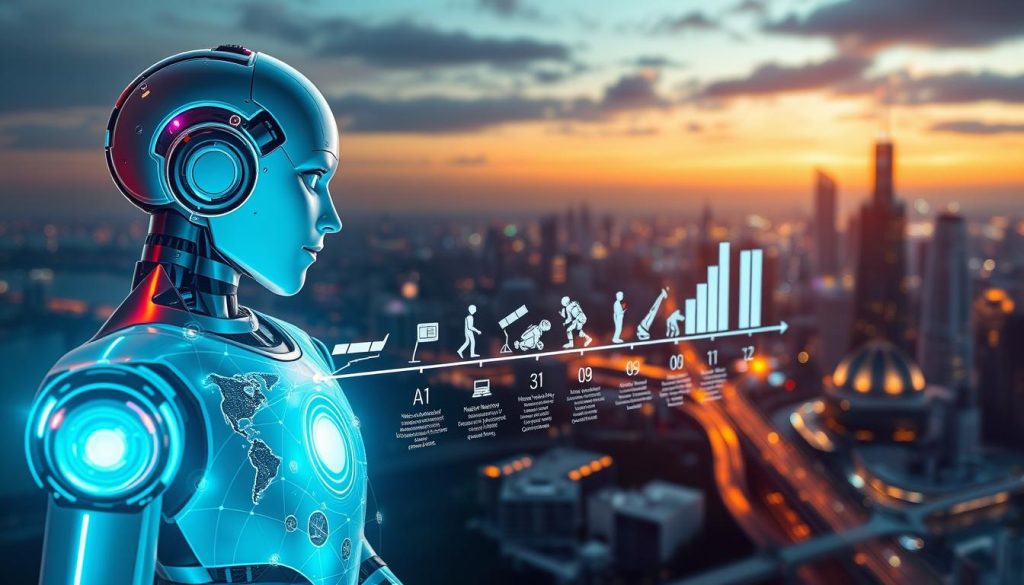
The AI timeline is filled with big steps that expanded what machines could do. From the early Checkers program in 1952 to IBM’s Deep Blue and Watson, these moments have sped up AI’s growth. They’ve set the stage for today’s AI, which tries to think and learn like humans.
Types of AI Technologies
AI technologies vary in what they can do and how they’re used. They range from simple automated programs to high-level AI that can think on its own. Looking closer, we can see areas like robotics, machine learning, and deep learning. Each is key to making AI better and smarter. Companies like Google and OpenAI are leading with new AI that could reach the dream of true artificial intelligence.
The Current State of AI in Society
Artificial Intelligence (AI) is now a big part of daily life and many areas of work. It’s pushing us towards the technological singularity. This means big changes in how businesses work and how we interact with AI.
AI Applications in Various Industries
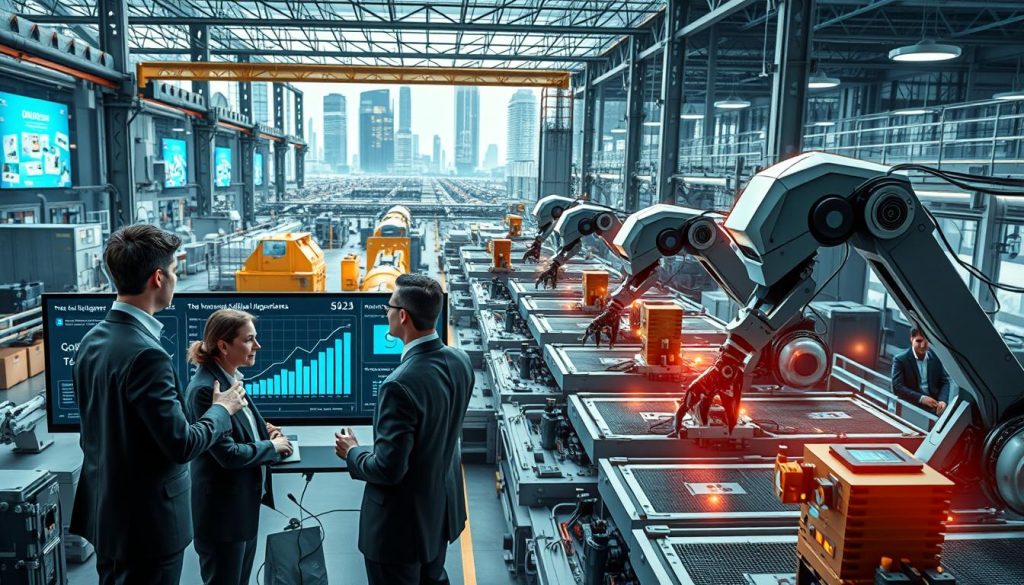
AI is useful in many areas because of how adaptable it is. In healthcare, it helps doctors diagnose diseases and create treatment plans that are specific to each patient. In the finance world, AI helps stop fraud and makes banking more personal. In manufacturing, it predicts when machines will need repairs. This cuts downtime and makes factories run better. Education is also changing with AI. It gives students learning that fits their needs and takes care of routine tasks.
Everyday Use Cases of AI
- Personal Assistants: Devices like smartphones and home speakers use AI to understand and carry out commands by talking naturally.
- Content Personalization: Services like Netflix use AI to figure out what you like to watch and suggest new shows and movies.
- Smart Appliances: AI makes home appliances smarter so they can adjust to how you live, saving you time and power.
The Economic Impact of AI on Jobs
AI has a big role in both creating and replacing jobs. It has led to breakthroughs like RNA sequencing for vaccines. Yet, it also makes some jobs, especially those with repetitive tasks, unnecessary. This change means some lose their jobs. But it also opens new jobs in AI management and development. We need to update worker skills and training to keep up.
Public Perception of AI Advancements
AI technology is evolving fast, sparking both fascination and concern. News often shows dramatic views of AI. But what do folks truly think about AI taking over and the idea of machines thinking like us?
Surveys on AI Trust and Concerns
Surveys have been key in understanding how people feel about AI. A 2023 Reuters/Ipsos poll found many Americans are wary. They see AI as a danger to society. This worry often comes from the fear of AI dominance, and if we can keep control as AI gets smarter.
The Role of Media in Shaping Perceptions
The media greatly influences public opinions about AI. It often uses sci-fi ideas, making people think AI has motives or awareness. This approach can make people more scared and confused. It overshadows the real, helpful uses of AI in our lives.

Addressing Common Myths About AI
Experts like Niels Wilde are trying to fix wrong ideas about AI. They say it’s important to separate sci-fi fears from what AI actually does. Clearing up these mix-ups can change fear into knowledge. It helps people understand AI’s real work and limits.
This effort to debunk myths shows what controlling AI might look like. It also shows how machine thinking could benefit us if used wisely. The aim is to get people to see AI’s good sides. But, we must also watch out for how it’s folded into our world.
The Threat of AI Automation to Employment
The rise of AI-driven automation is a big change in jobs worldwide, bringing both good and bad. As artificial intelligence global control grows, it’s changing many industries. This changes the way we do our jobs.

AI technology is being used more and more, changing many jobs. This is especially true for routine and office tasks. Yet, AI doesn’t just take away jobs. It also creates new ones, bringing a whole new era for workers.
| Job Sector | Impact of AI Automation | New Opportunities |
|---|---|---|
| Manufacturing | High displacement of routine tasks | Roles in robot maintenance and AI management |
| Retail | Automation of cashier and stocking jobs | Customer experience and tech support roles |
| Healthcare | AI-driven diagnostics tools replace some clinical jobs | Growth in personalized medicine and patient care tech |
| Finance | Algorithmic trading and automated customer services | Financial advisory and AI system oversight |
This table shows how AI-driven automation comes with pros and cons. While some jobs disappear, new ones appear. These new jobs need advanced tech skills, like working with AI and keeping systems safe. The key is to always be learning and get ready for new jobs that AI makes.
The effect of AI on jobs is complex and different everywhere. Both people and governments need to act. They should take advantage of AI’s good sides and deal with its challenges.
AI Governance and Ethical Considerations
The need for strong governance and ethical rules in AI is critical. AI technologies have grown faster than laws can keep up. This requires a detailed plan to align tech advances with our values and ethics. It will help technology benefit humanity, avoiding risks and unfairness.
The Need for Regulations
AI’s fast growth has shown big gaps in regulations that must be filled quickly. Governments and groups must create laws that match tech progress. They must also ensure innovation is safe and good for everyone.
Ethical Frameworks for AI Development
To ethically guide AI’s future, clear rules promoting transparency, fairness, and responsibility are needed. This is key to making people trust AI systems. It reassures everyone that AI use is responsible and ethical.
Global Initiatives on AI Bias and Fairness
Global efforts are focusing on eliminating AI bias and ensuring fairness. These include international projects aiming to create universal standards. These standards make sure AI is used fairly for all.
Besides these actions, the table below shows key global initiatives. They aim at keeping AI systems unbiased and fair, stating their goals and the groups involved.
| Initiative | Description | Involved Parties |
|---|---|---|
| AI Global Surveillance Accord | An agreement focusing on the development and deployment of AI technologies in a manner that respects privacy and prevents mass surveillance. | Multiple countries, tech giants |
| OpenAI Ethics Charter | A commitment to ensuring AI systems operate transparently and ethically, fostering trust and cooperation internationally. | OpenAI, academic institutions |
| UN AI Safety Summit | An annual conference aimed at dialogues between countries to harmonize AI safety regulations globally. | United Nations, Member States |
By focusing on these areas of AI governance, we move towards an AI future. One that sticks to the highest ethical standards. And benefits everyone in the world.
Impacts of AI on Privacy and Security
In our digital age, AI advancements raise big concerns for privacy and security. Technology is getting closer to the technological singularity. It’s key to know how AI changes data privacy and cyber safety. AI systems are getting smarter, making tech better but also risking data misuse and more cyber dangers.
How AI Affects Personal Data
AI can handle lots of data fast, which makes us think about personal data use. It can offer personalized services but also make us vulnerable. There’s worry about AI using and maybe sharing our info without our ok. This feels like an AI doomsday.
Risks of AI in Cybersecurity
Using AI in cyber safety is tricky. AI can help find threats better. But, it could also help make very smart cyber-attacks, like AI-powered malware. This could lead to a future where AI beats humans in cyber battles.
Measures to Protect Privacy in the Age of AI
To fight AI threats, strong privacy steps are needed. We need tough data protection laws and to push for responsible AI. We should also improve our cyber safety plans for future challenges. Everyone, from big leaders to you and me, must help keep our digital world safe.
The Future of Human-AI Collaboration
We’re moving deeper into an age filled with tech wonders, and the human-AI relationship is changing many industries. This bond is more about working together than one replacing the other. It shows us how humans and superintelligent AI systems can join forces to drive innovation and work smarter.
In fields like healthcare and finance, working with AI has become crucial. Superintelligent AI systems handle big data and make predictions. Humans bring emotional smarts, ethics, and moral thinking, which AI can’t do on its own.
- Synergistic Roles of Humans and AI: When AI and creativity combine, we get better results, with human creativity boosted by AI’s insights.
- Case Studies of Successful Collaborations: In medical tests, AI algorithms work faster and more accurately than people in analyzing images. Yet, doctors offer essential care and context that AI lacks.
- The Importance of Human Oversight: Humans must watch over AI to make sure it stays within ethical limits. This supervision stops AI from being misused and ensures it matches our values.
How we work with AI keeps evolving, bringing new benefits and challenges. Every AI improvement makes us think again about our partnership with technology. Keeping a balance, where AI helps but doesn’t replace humans, is an ongoing but crucial task in our tech journey.
The Role of Government and Institutions
The complex world of artificial intelligence (AI) is shaped significantly by governments and institutions. They play crucial roles through making laws, working together on research, and setting global standards. This involvement steers AI’s direction and how it fits into our daily lives. It also keeps the focus on managing AI responsibly and ethically.
Legislation on AI Deployment
Creating laws for AI management is essential. Governments worldwide are setting rules for ethical AI use and development. These laws protect public interests by ensuring AI follows moral guidelines. They also clear the path for safe and innovative uses of AI technology.
Public-Private Partnerships in AI Research
Governments and businesses working together can push AI forward while considering its effects on society. This collaboration combines government support with the creativity of private companies. Such efforts speed up research and aim it at creating benefits for everyone.
International Collaboration on AI Standards
AI technologies cross borders, making worldwide cooperation vital for setting unified standards. These global collaborations help maintain consistency and build international trust. By uniting efforts, countries can tackle AI-related challenges more effectively, protecting both progress and ethical values.
Conclusion: Should We Fear AI’s Future?
“Will AI take over the world?” This question leads to many different opinions. It depends on the latest news or movie people have seen. However, after looking closely, we see a story with many sides. AI is growing fast, and it can do great things, like changing industries, making things work better, and helping people do more. But this growth also comes with challenges. We need to be ready and smart about them.
Recognizing the Potential Benefits
AI stands ready to change many areas for the better, from health care to saving our planet. Benevolent AI aims to make our lives better. It’s already showing us answers to problems we couldn’t solve before. This includes custom learning plans and predicting health risks. AI’s future should see it as a helper. It will improve our lives and let us reach our full potential.
Preparing for AI Challenges
With new chances come new responsibilities. We have to look ahead at the problems AI could bring into our daily lives and jobs. This includes losing jobs, worrying about our private information, and making sure computers are safe. To face these issues, we need strong rules, companies that take care of people, and active communities. It’s crucial that AI stays ethical. It should protect what’s best for everyone without holding back new inventions.
Emphasizing Human Agency in AI Development
Keeping the human touch in AI is vital. Making AI that shows our values and giving people control and understanding of AI changes is key. We, the creators and users, need to decide how AI grows. This includes developers, ethical experts, law makers, and anyone else. It’s on us to make sure AI helps, not hurts, our shared future.
FAQ
Will AI take over the world?
What is artificial intelligence (AI)?
What have been some major milestones in AI development?
How does AI impact various industries today?
What are some everyday use cases of AI?
How is AI affecting the job market?
What are some common concerns about AI among the public?
How does media portrayal affect public perception of AI?
How do ethical frameworks affect AI development?
What initiatives exist to address AI bias and fairness?
What privacy and security issues arise from AI?
How can AI and humans work together?
What is the role of governments and institutions in AI development?
In what ways will AI potentially benefit society?
How should we prepare for AI’s challenges?
Why is human agency important in AI development?
About the author : virtual-glasses